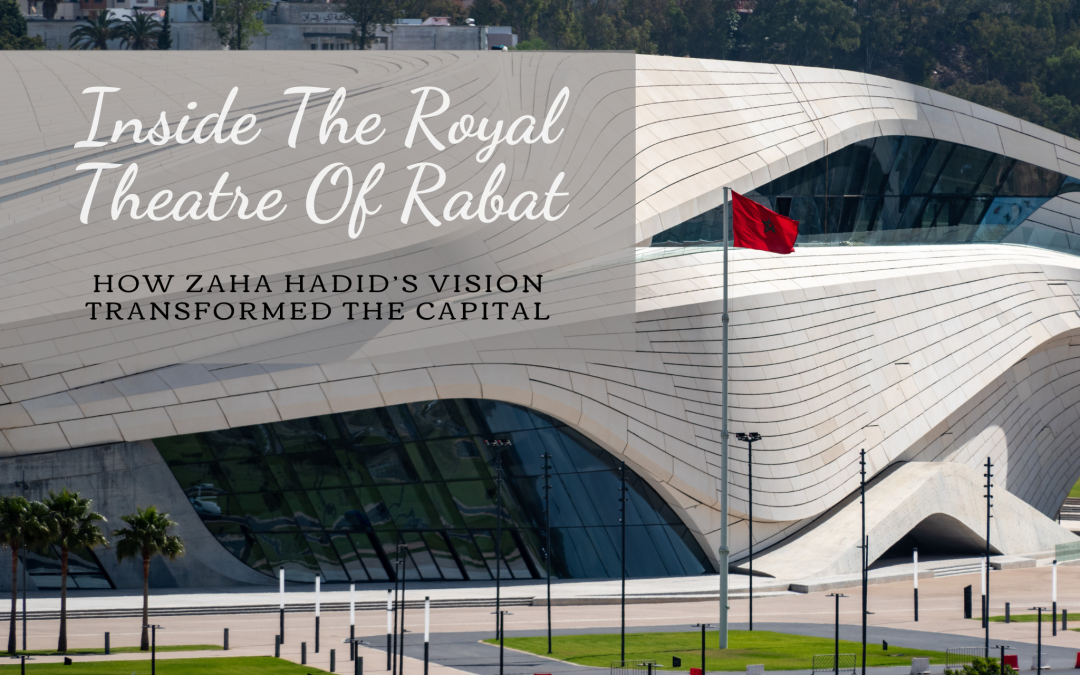
The Royal Theater of Rabat opened its doors to the public in April 2026, more than a decade after its design was drawn, five years after its walls went up, and eight years after the woman who imagined it died. What it means for Morocco is something the country has been preparing to say for a very long time.
There is a particular kind of patience required of great public buildings. They get conceived in one era, built in another and understood in a third. The Royal Theater of Rabat is a sweeping, fluid structure sitting at the edge of the Bouregreg valley, with curves that catch the Atlantic light. It was imagined by Zaha Hadid around 2010; construction began in 2014, the shell was complete by 2021; and it was officially inaugurated in October 2024 during a state visit by French President Emmanuel Macron. But it didn’t host a performance and didn’t seat an audience until the evening of April 22, 2026, when around 100 Moroccan artists took to the stage for the first time, and the Orchestre Philharmonique du Maroc filled the hall with sound.
Fifteen years in the making. The stage was worth the wait.
Who Was Zaha Hadid? The Architect Behind the Royal Theatre of Rabat

Zaha Hadid was born in Baghdad on October 31, 1950, into a wealthy and intellectually active family, her father co-founded Iraq’s National Democratic Party, her mother was an artist. She was educated in Switzerland and England, studied mathematics at the American University of Beirut, and then enrolled at the Architectural Association in London in 1972, where she fell in under the influence of Rem Koolhaas and Elia Zenghelis. She was, from early on, uncomfortable with the right angle.
She founded Zaha Hadid Architects in London in 1979 and spent much of the 1980s winning competitions she was never given the chance to build. Her drawings were extraordinarily painterly, almost violent in their dynamism, but contractors and clients found them impossible to execute, and for a long time the architectural establishment treated her as a provocateur rather than a practitioner. It took until 1993 for her first completed building to open: the Vitra Fire Station in Weil am Rhein, Germany, a piece of aggressive, angular concrete that felt like a building mid-leap.
After that, the commissions came, and they came large. The MAXXI museum in Rome. The London Aquatics Centre, built for the 2012 Olympics. The Heydar Aliyev Center in Baku, Azerbaijan, 57,000 square meters of undulating white surface that managed to look both inevitable and impossible. The BMW Central Building in Leipzig. The opera house in Guangzhou. Building after building that asked the same question: what if a structure could move?
In 2004 she became the first woman (and the first Iraqi) to receive the Pritzker Architecture Prize, architecture’s equivalent of the Nobel. In 2016, she became the first woman to receive the Royal Institute of British Architects’ Gold Medal in her own right. Neither honor came easily or early. She was 54 when she won the Pritzker. She had been building for twenty years before the profession’s most prestigious institutions caught up with what her peers already knew.
She died on March 31, 2016, in Miami, of a heart attack, aged 65. She was mid-career by any reasonable measure. The Royal Theater of Rabat was already in progress. It is among the last major projects she personally conceived, and the firm she left behind, now led by Patrik Schumacher, has seen it through to completion.
Inside the Royal Theater of Rabat
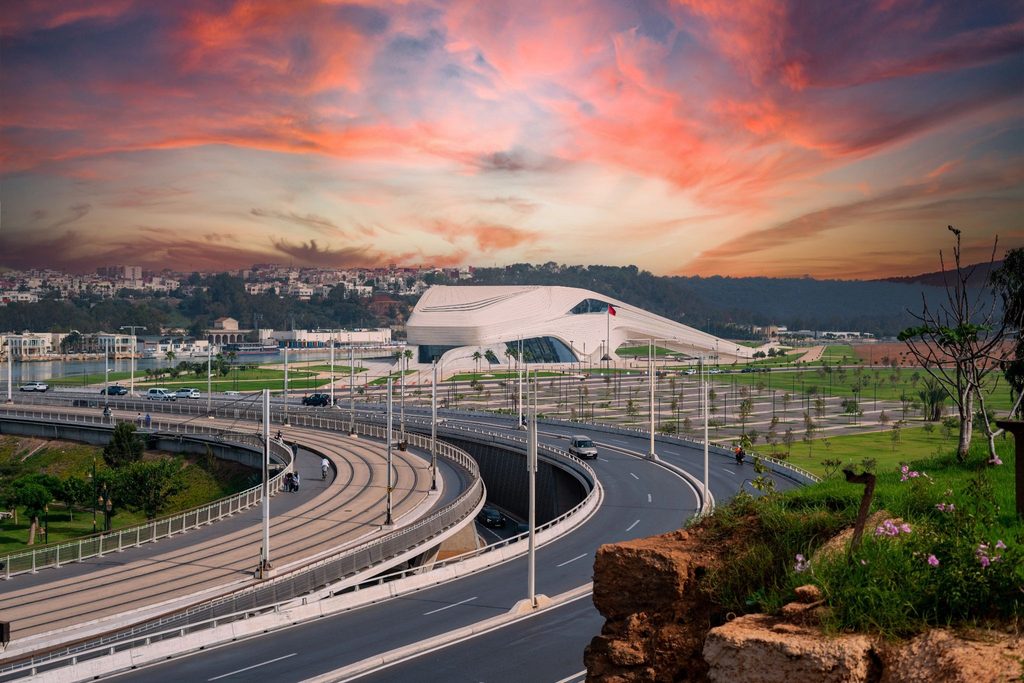
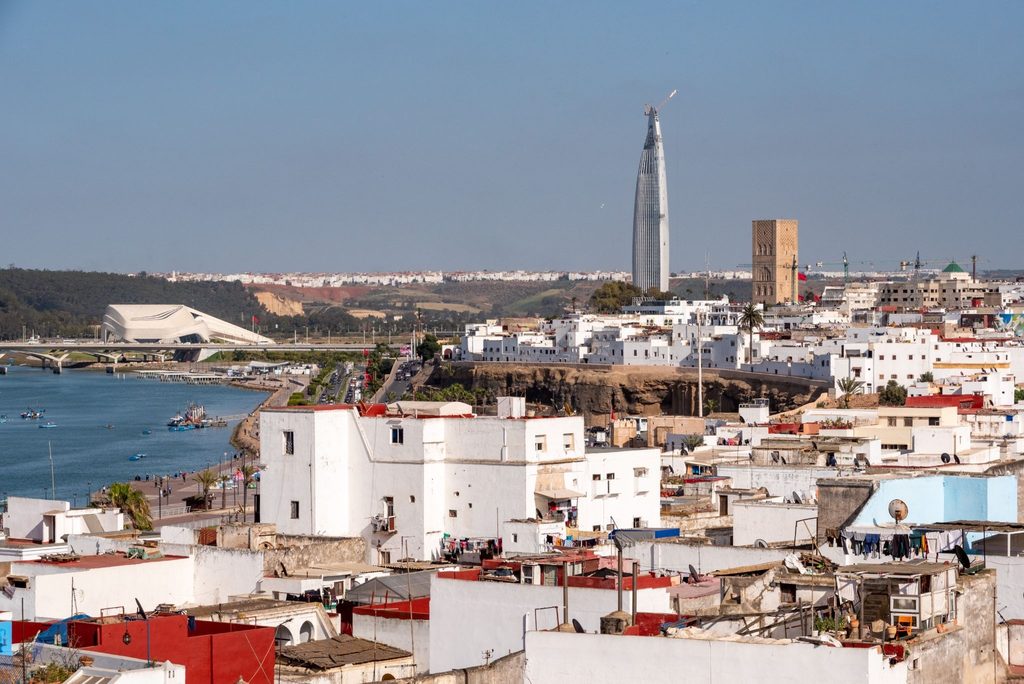
The theater sits in the heart of the Bouregreg valley, that wide stretch of water and development that separates Rabat from Salé, and in this location it joins a particular constellation of Moroccan monuments. The Hassan Tower, the unfinished minaret of a 12th-century mosque, one of the great silhouettes of Moroccan architecture , stands nearby. So does the Mausoleum of Mohammed V. The Tour Mohammed VI rises on the skyline. The Royal Theater is the newest member of this company.
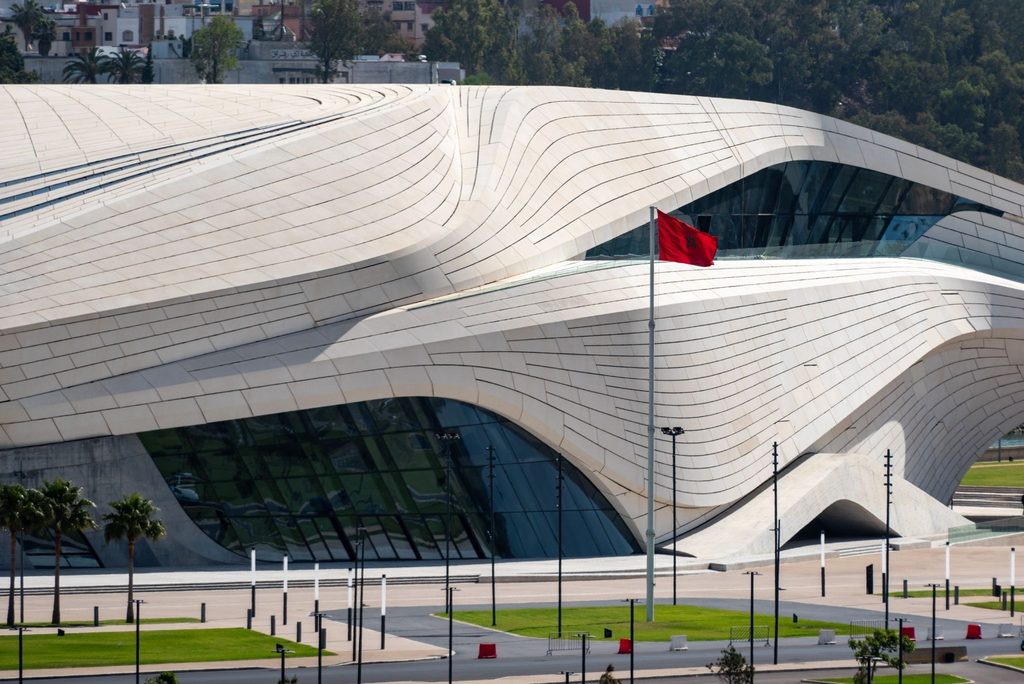
From the outside, the structure reads as a series of interlocking organic forms, surfaces that seem to have been shaped by water or wind rather than architects and steel. Hadid’s design draws consciously from Moroccan geometric tradition: the intricate interlacing patterns found in Moroccan zellige tilework and carved plaster shine in the building’s structural logic, though expressed at enormous scale and in a thoroughly contemporary architectural language. Morocco’s visual DNA runs through the structure.
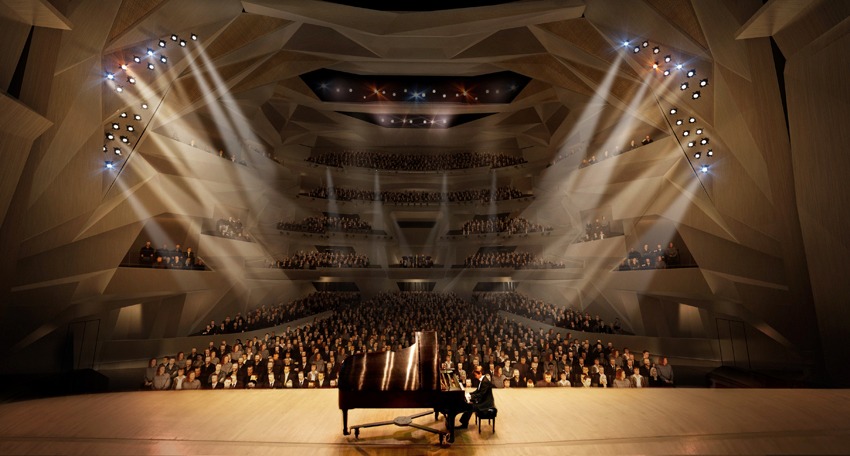
Inside, the main auditorium seats 1,800 people and is equipped with acoustic and stage technology that places it among Africa’s most advanced performance venues. The space has been designed to hold opera, classical and symphonic concerts, ballet, traditional Moroccan music, theater, and large-scale musical productions. A smaller studio theater at 520 seats handles more intimate programming. And beyond the walls, an open-air amphitheatre facing the river valley holds 7,000, a space built for the kind of festival nights that define a city’s cultural calendar.
Why Morocco Built Africa’s Largest Theater
The question of why a country builds a theater of this scale and cost deserves a real answer rather than a diplomatic one. Morocco has long occupied an unusual position in global cultural life, present in many conversations, central to few of them. The country’s artistic and musical traditions are ancient and layered: Andalusian classical music that traveled here from Al-Andalus in the 15th century; Gnawa ritual music rooted in sub-Saharan Africa, classified by UNESCO as Intangible Cultural Heritage in 2019; the malhun, a form of poetic song born in the artisan quarters of southern Moroccan cities; Amazigh folk traditions that vary by geography and community; Chaabi, Aita, Ahwash, Ahidus , a musical vocabulary that most of the world has never heard named, let alone heard played.
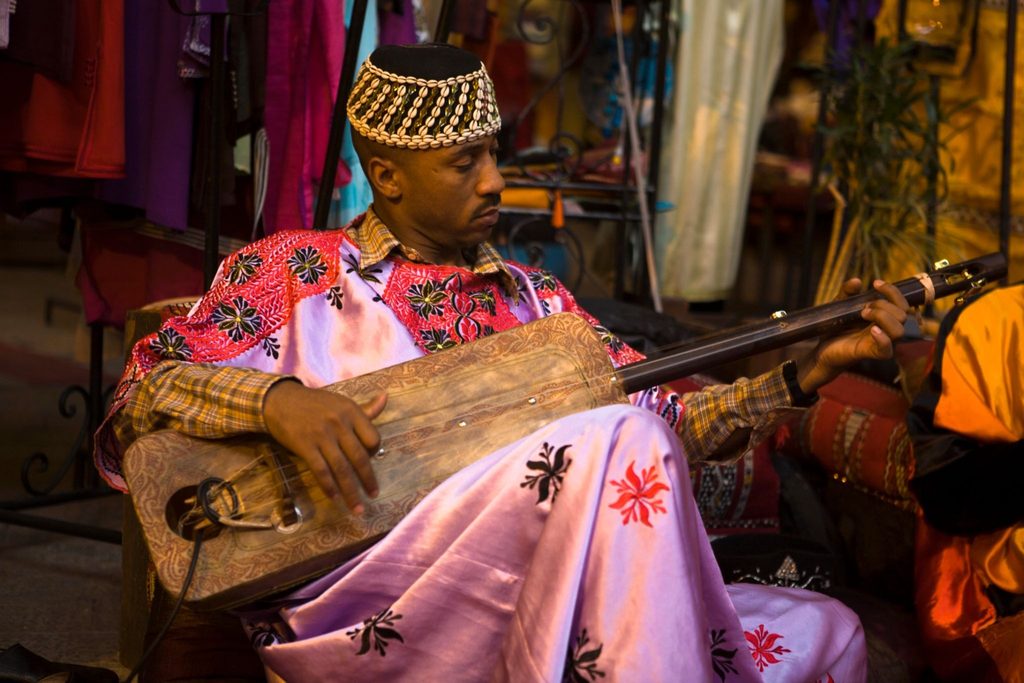
Morocco has always produced artists. What it has lacked, for much of its modern history, is infrastructure worthy of them. Theaters in Morocco developed unevenly, from shadow theaters, open-air performances, then slowly permanent buildings, often underfunded and underequipped. The Royal Theater changes that calculation at a stroke. It is the kind of facility that allows a country to host, rather than travel to.
There is also the matter of international positioning. Under King Mohammed VI, Rabat was designated Morocco’s cultural capital, and the broader “Rabat, City of Lights” program represented a multi-billion dirham bet on culture as infrastructure and as a genuine driver of economic activity, tourism and diplomatic weight. A Theater designed by one of the world’s most celebrated architects, sitting on the Bouregreg, across from a UNESCO-listed medina, is a statement that Morocco intends to receive the world on its own terms.
The opening night made this explicit. Around 100 Moroccan artists performed. The Orchestre Symphonique Royal and the Orchestre Philharmonique du Maroc took the stage, conducted by pianist and conductor Dina Bensaïd. No foreign acts headlined. The inaugural performance was, deliberately, Moroccan, a signal that the theater’s ambitions are not primarily about importing culture but about giving existing culture a house large enough to live in.
Zaha Hadid’s Legacy and the Theater She Never Got to See Open
Zaha Hadid will not attend a performance here. She died a decade before the building opened to the public. She has expressed genuine excitement about the project, its connection to Morocco’s musical history, its role in the country’s cultural life. The building that was completed by her firm is faithful to her vision, and the language of Zaha Hadid Architects is consistent enough across its principals that there is no obvious seam.
What remains is the work. The curves of the exterior. The acoustic volume of the main hall. The interplay of light and material that she described as essential to the emotional experience of a performance space, the idea that the architecture itself should heighten what happens inside it, not simply contain it. A theater that moves you before the curtain rises.
That is what Hadid consistently understood about public buildings: They shape the experience of being inside them. The best ones make you feel something before you’ve sat down, before the lights have dimmed, before anyone has sung a note. Whether the Royal Theater of Rabat achieves this in practice, and whether the relationship between the building and the performances it houses becomes the thing Hadid imagined, is something only time and programming will answer.
The Bouregreg at dusk runs between two cities that have been watching each other across the water for centuries. Rabat on one bank, Salé on the other. The river is wide and slow and the light on it in the evening is the gold of the Moroccan Atlantic coast. The Theater sits on that bank now, catching that light, its surfaces doing what Hadid always wanted surfaces to do…moving, apparently, even when still.
It took fifteen years to get here. Some things are worth the wait.
Why the Royal Theater of Rabat Belongs on Your Morocco Itinerary
Rabat has been the city that travelers skip on their way to Marrakech or Fes. That’s changing. The Royal Theater is the newest reason to stop, but the city was already holding out on you. The Kasbah des Oudayas sits above the Bouregreg with some of the most quietly beautiful streets in the country. The Hassan Tower has been standing unfinished since the 12th century and somehow looks more complete for it. The Mausoleum of Mohammed V is one of the finest examples of modern Moroccan craftsmanship in existence. And the old medina moves at a pace that Marrakech forgot years ago.
The theater doesn’t replace any of that. It just gives Rabat a cultural anchor serious enough to match what was already there.
Planning a Trip to Rabat?
The Royal Theatre is a strong reason to visit but Rabat rewards the extra day or two.
- Kasbah des Oudayas — the blue-and-white quarter above the river, best visited in the late afternoon
- Hassan Tower & Mausoleum of Mohammed V — two monuments, one visit, worth every minute
- The Old Medina of Rabat — smaller and quieter than Fes, and better for it
- Sala Colonia & Chellah — Roman ruins and a medieval necropolis, ten minutes from the city center
About the Author

Ahlam Morjani is a Tangier-based writer, aspiring psychologist, and devoted animal lover. When she’s not immersed in her work or studies, she’s exploring the intersections of cinema, philosophy, and self-development through her articles.
She loves to spend her quiet days feeding the city’s strays that roam the medina’s narrow streets or settling into the worn velvet seats of Tangier’s old cinemas, finding profound inspiration within these spaces that resonate with her explorations into film and art, societal nuances, and the very joie de vivre of life itself.