
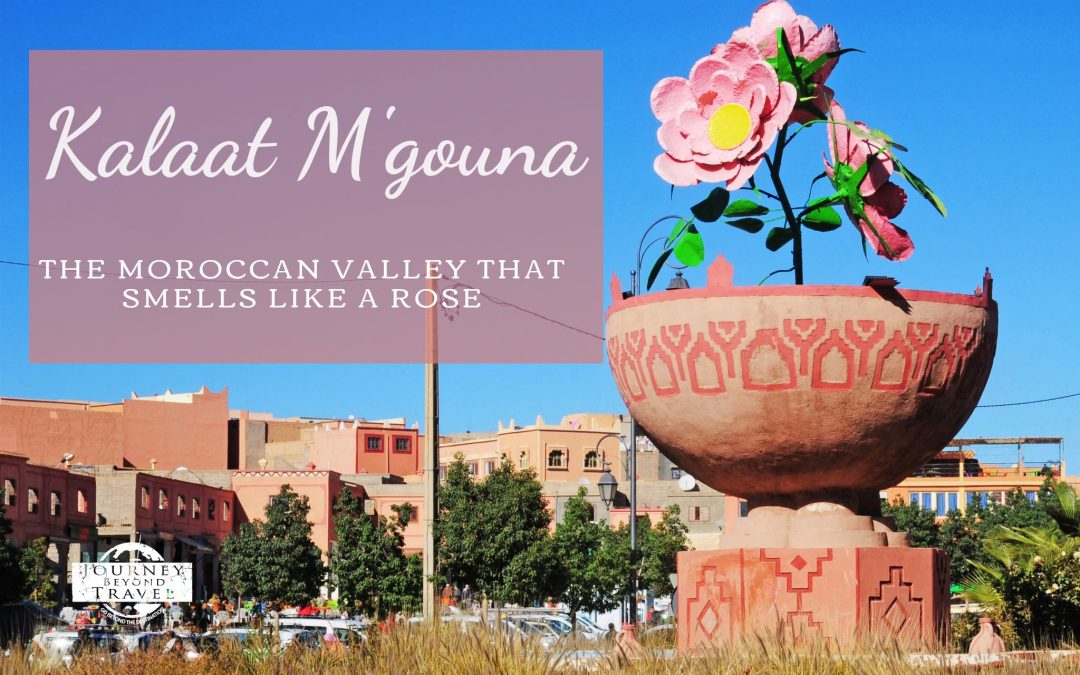
There’s a moment, somewhere along the road between Boumalne Dadès and Tinerhir, when the air changes. The dry, mineral smell of the southern desert gives way to something floral and unmistakable, and before you even see the town, Kalaat M’gouna shows up in the air…or more so, in its rosy floral scents. This is what arrival in Morocco’s Valley of Roses feels like.
The town sits in the Dadès Valley at roughly 1,700 meters altitude, surrounded by the High Atlas on one side and a seemingly endless patchwork of rose hedgerows on the other. It’s not a large town. It doesn’t have the dramatic kasbahs of Aït Benhaddou or the bustling medina of Ouarzazate. What it has is something more specific: a single crop that has shaped an entire community’s identity for over a thousand years, and a valley that turns pink every spring.
Why Kalaat M’gouna Is Known as the Valley of Roses
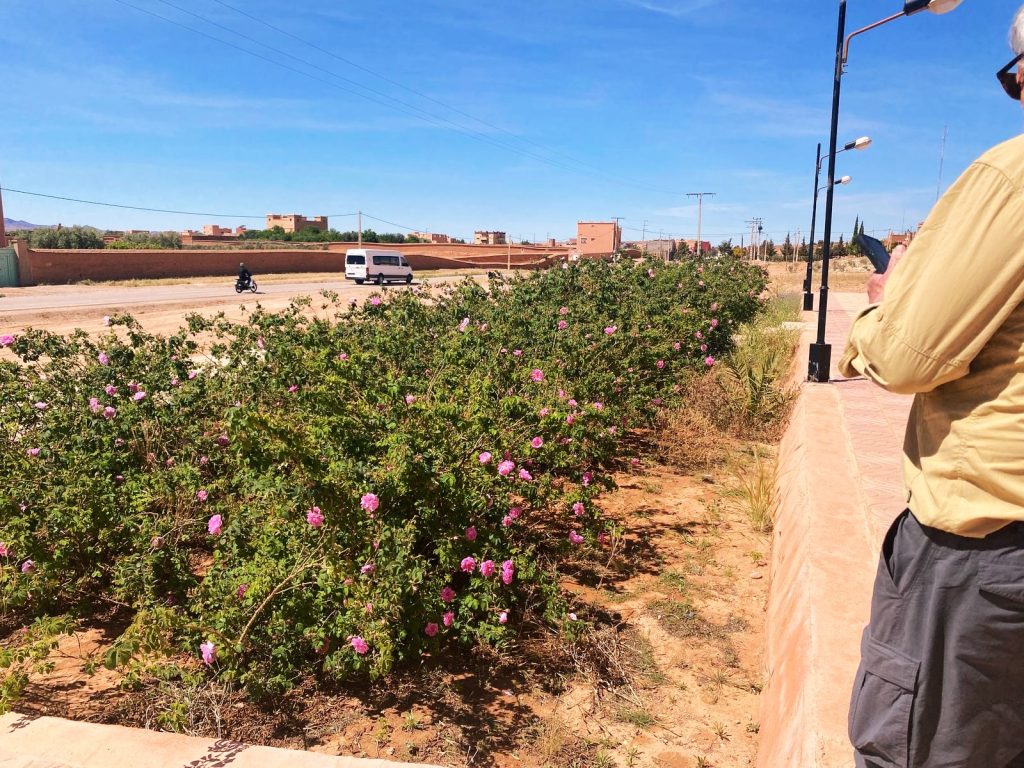
The rose that grows here is called rosa damascena (the Damask rose) is believed to have arrived in Morocco in the 10th century, carried by pilgrims returning from Saudi Arabia. It found ideal conditions in this valley: the altitude keeps temperatures cool at night, the Dadès River provides water, and the dry air between harvests prevents disease. Over centuries, farmers planted rose hedgerows along the boundaries of their fields, originally as a natural barrier. Those hedgerows now stretch for kilometers in every direction.
What makes the Moroccan rose industry different from most is the scale. It takes close to 4 tons of rose petals to produce just one liter of rose essential oil (rose attar) and the entire harvest window lasts only a few weeks, roughly late April through mid-May. During that window, the valley mobilizes entirely around the rose.
Families pick by hand in the early morning hours, before the heat sets in, when the flowers are still closed and the essential oil content is at its highest. The petals go directly to local distilleries, where they’re processed within hours of picking. Several of these distilleries welcome visitors, and watching the steam distillation process , smelling the first drops of rosewater come through, is one of the more genuinely memorable experiences in southern Morocco.
What to See and Do in Kalaat M’gouna
Visit a Rose Distillery
The small distilleries scattered around the valley are the clearest window into how the rose economy actually works. You’ll see the copper stills, smell the condensed rosewater, and often have the chance to buy directly from the producer , oil, water, and dried petals at a fraction of what you’d pay in Marrakesh souks.
One practical tip on rosewater: Authentic rose water is clear. The pink-tinted versions sold widely in souks are almost always synthetic. If you’re buying, clarity is quality.
Walk Through the Rose Fields
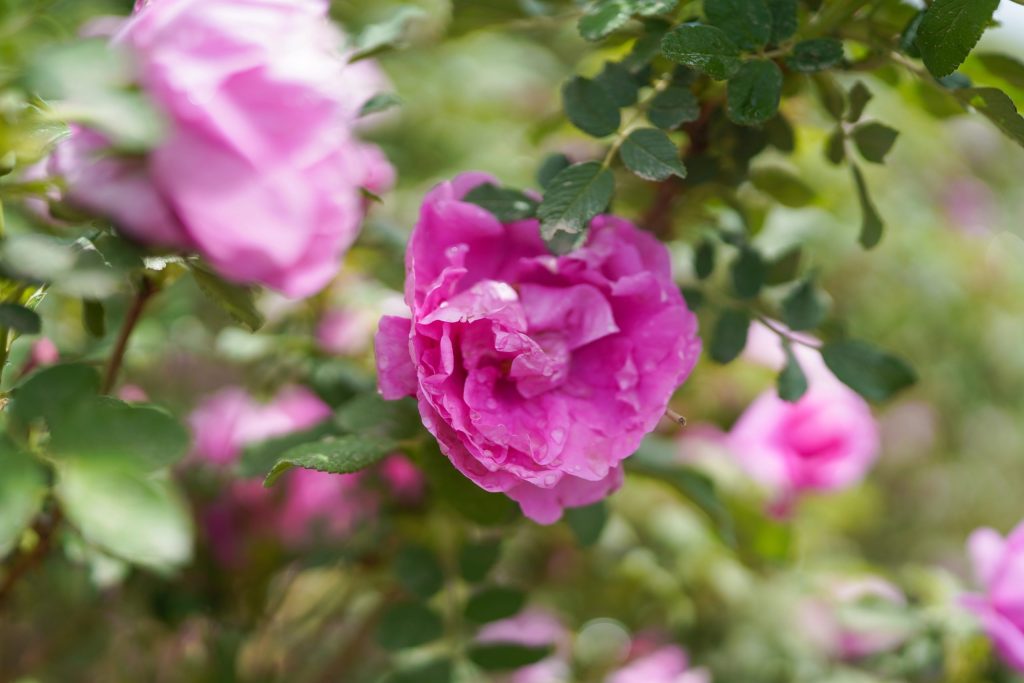
During harvest season, the fields are open and walking through them costs nothing. The experience is simple, rows of pink flowers, mountain air, the sound of the river, but it’s the kind of thing people describe for years afterward. Go early morning if you can, both for the light and to catch the pickers at work.
Explore Bou Tharar
A short drive from Kalaat M’gouna, the Berber village of Bou Tharar sits along the river in a narrow canyon. Many of the older structures are now in ruins, giving the village a layered, unhurried quality. It’s the kind of stop that rewards wandering more than guided explanation.
Hike the Surrounding Mountains
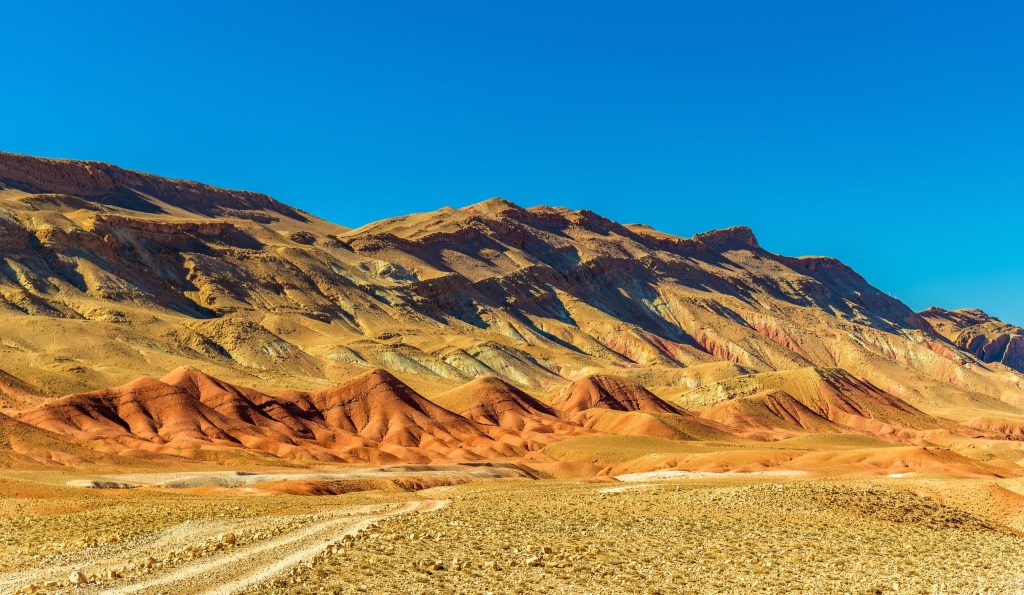
The terrain around Kalaat M’gouna is serious hiking or trekking country. Mount Mgoun, after which the town is named, rises to 4,071 meters and is one of the highest peaks in the High Atlas outside of the Toubkal massif. Day hikes in the foothills are manageable without special equipment; a multi-day summit attempt requires a guide and preparation. The local agencies in town can arrange both.
When to Visit Kalaat M’gouna
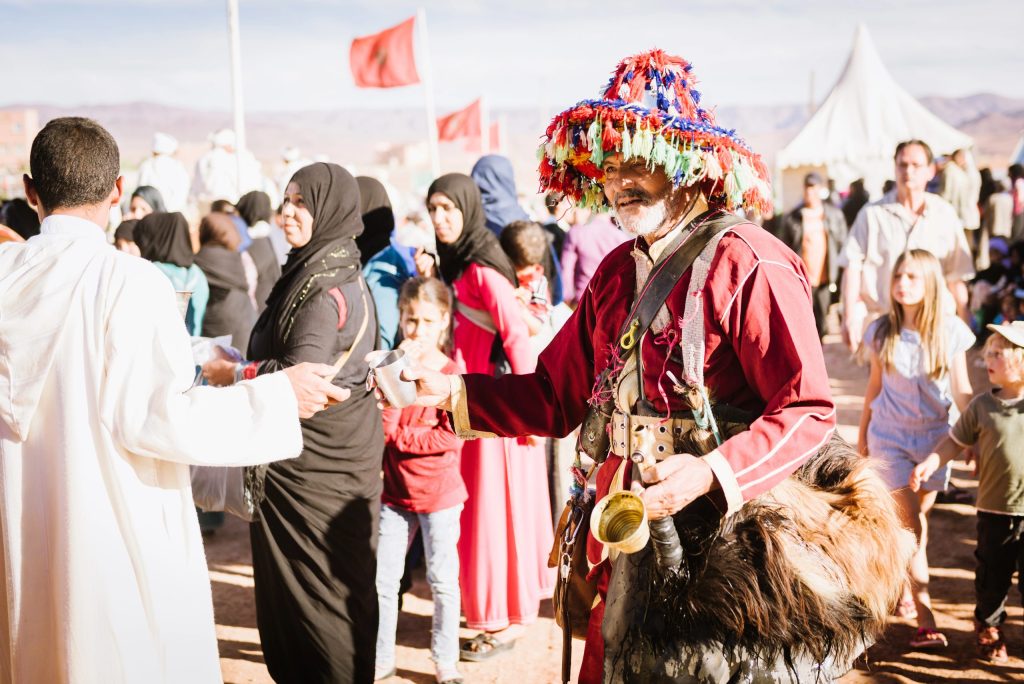
Late April to mid-May is the obvious answer, this is when the roses are in bloom, the distilleries are running, and the town hosts its annual Festival of Roses (see below). The valley is genuinely transformed during this period, and the combination of landscape, scent, and cultural activity is hard to replicate at any other time of year.
That said, the valley is worth visiting outside of rose season too. The Dadès landscape is striking year-round, and the summer months bring cooler temperatures than the Saharan towns further south. Winter is cold at this altitude but quiet, with good conditions for hiking.
What to avoid: arriving in late May or June expecting to see roses in bloom. The harvest is over quickly.
How to Get to Kalaat M’gouna
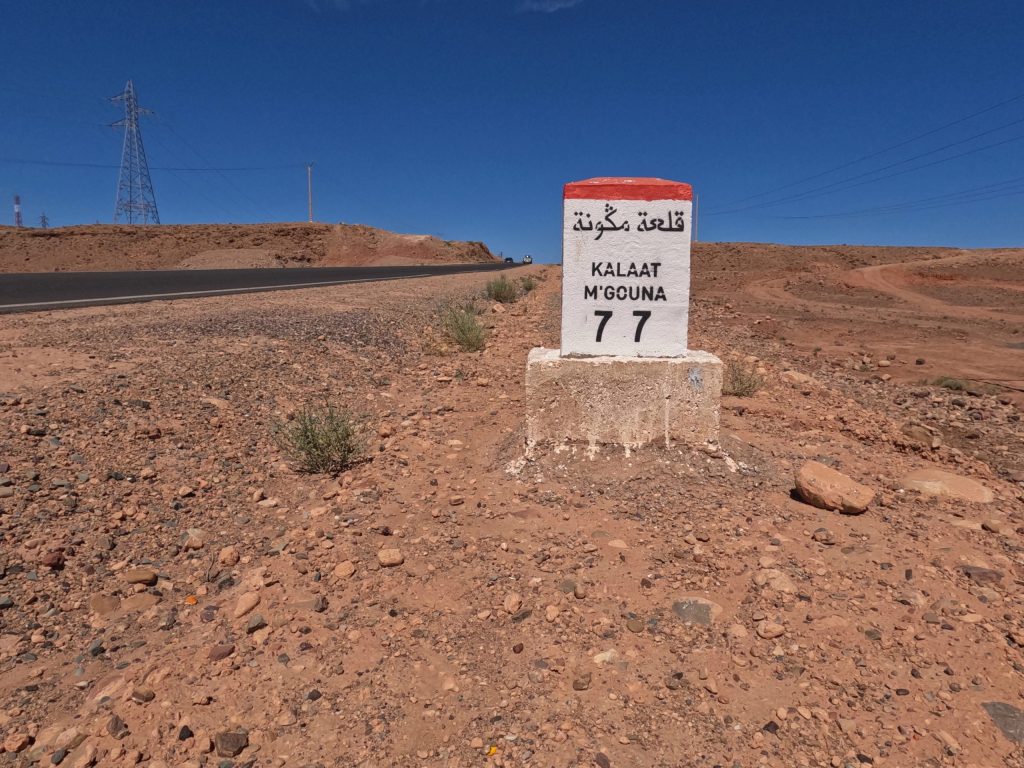
Kalaat M’gouna sits on the N10 highway, approximately 85 km east of Ouarzazate and 40 km west of Boumalne Dadès. It’s rarely visited on its own; most travelers pass through as part of a southern Morocco circuit that includes Ouarzazate, the Dadès Gorges, and the Todra Gorge near Tinerhir.
By car or driver: The most practical option. The N10 is a well-maintained road with dramatic scenery throughout.
By bus: CTM and Supratours run services along this route from Marrakesh via Ouarzazate. Journey time from Marrakesh is roughly 6–7 hours. Local connections exist but are infrequent.
As a day trip from Ouarzazate: Entirely feasible given the 85 km distance. A driver for the day will allow you to stop at distilleries and village sites that a bus won’t.
Where to Stay in Kalaat M’gouna
Accommodation options are modest by comparison to larger Moroccan cities, but there are several well-regarded guesthouses in and around town. Staying overnight makes sense if you want to be in the fields at dawn during harvest season, or if you’re planning a hike. Day-trippers from Ouarzazate can cover the main stops comfortably in a half-day.
What to Buy
The rose products here (rosewater, rose oil, soaps, dried flowers) are the obvious choice, and buying directly from local distilleries or cooperatives means your money goes further toward the community that produces them. The rose oil is expensive for good reason: the yield per kilogram of petals is genuinely tiny.
Beyond roses, the area has good daggers (khanjar). Kelaat M’gouna has historically been known for its knife-making and locally made Amazigh jewelry.
Practical Information
Location: Dadès Valley, 85 km east of Ouarzazate, Drâa-Tafilalet region
Best time to visit: Late April to mid-May for roses; year-round for hiking and scenery
Getting there: Car or driver recommended; CTM buses available from Ouarzazate and Marrakesh
Accommodation: Several guesthouses in town and along the valley road
Rose Festival: Held annually in early May
Planning a Broader Southern Morocco Trip?
Kalaat M’gouna makes most sense as part of a longer southern circuit. From here, the logical next stops are:
- Boumalne Dadès and the Dadès Gorges — 40 km west, with dramatic rock formations
- Ouarzazate — the gateway to the south, with Aït Benhaddou nearby
- The Drâa Valley — south toward Zagora, through oasis towns and palmeries
If you’re visiting Morocco in May and your itinerary allows any flexibility, routing through Kalaat M’gouna during the rose harvest is one decision you shouldn’t second-guess.
About the Author

Ahlam Morjani is a Tangier-based writer, aspiring psychologist, and devoted animal lover. When she’s not immersed in her work or studies, she’s exploring the intersections of cinema, philosophy, and self-development through her articles.
She loves to spend her days feeding the city’s strays that roam the medina’s narrow streets or settling into the worn velvet seats of Tangier’s old cinemas, finding profound inspiration within these spaces that resonate with her explorations into film and art, societal nuances, and the very joie de vivre of life itself.







Trackbacks/Pingbacks