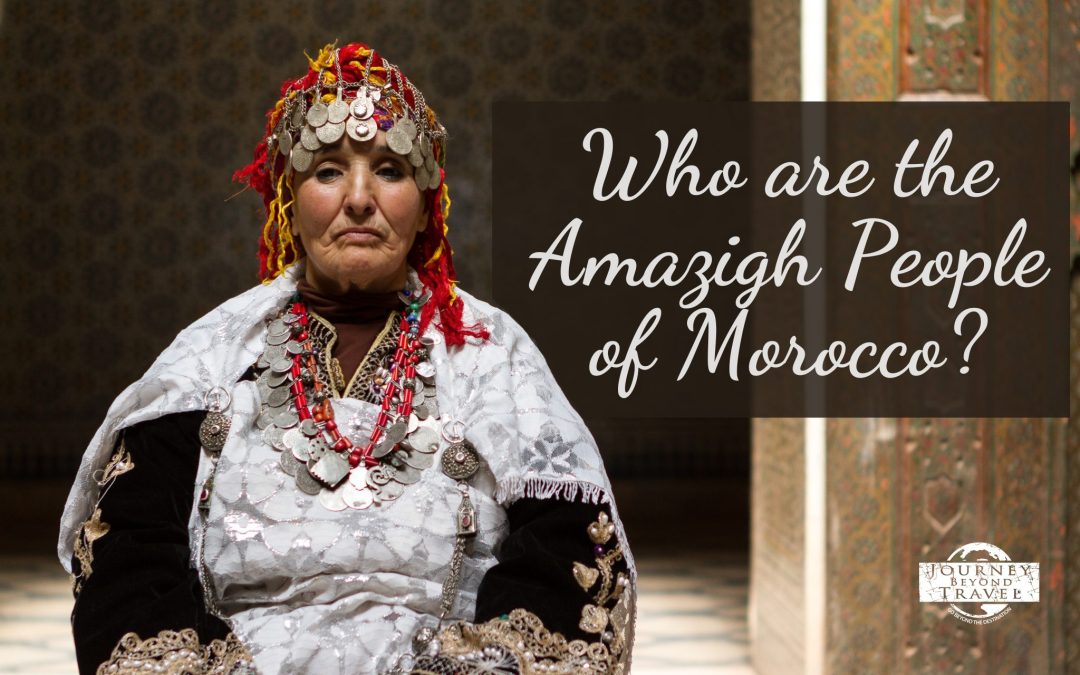
Traveling in Morocco, you are bound to trip across one of the most defining characteristics of the country : The Amazigh culture. The Amazigh are the indigenous inhabitants of North Africa. They have traditionally been referred to as Berbers, a term that found its origins in Greek and was later used by Arab conquerors to carry derogatory connotations. The word Amazigh means “free people,” and rightly so, as in Morocco they have formed the historical, cultural, and social foundations of the country itself across centuries. With a unique language and culture, the Amazigh do not merely stand out, but stand at the core of Morocco’s identity, as one of the last bastions of tradition in an ever-modernizing society; while even the oldest villagers now happily chat on smartphones, they do so in a tongue almost impenetrable to anyone from the outside world, yet rich, layered and full of beauty.
Amazigh vs Berber: A Short Etymology
Amazigh history goes back to prehistoric times. In fact, Morocco is home to the oldest Homo sapiens ever found — nearly 300,000 years old. This means that the indigenous people of Morocco have been here since the earliest chapters of human history. Much of what we know about the very first people of Morocco comes from archaeological records. Of the Amazigh themselves, much of that history is oral, preserved through memory, lineage, and storytelling rather than written domination, passed from one generation to another.
The richness of Amazigh culture is such that it would be a crime to use the word Berber. The name “Berber” derives from “Barbary,” that is, from the Greek barbaria. Though “Berber” is commonly used around the world and throughout Morocco, sometimes even by those who identify as Amazigh, it is historically loaded and reductive, and far from the most accurate name. Many don’t even think twice about the origin of the term. Ultimately, it is up to those who understand the significance of the word Berber to raise awareness and challenge inherited hierarchies and cultural domination. That’s a story for another time.
Thousands of years ago, the Amazigh ruled all of North Africa, largely through different tribes. They crisscrossed the Sahara and the southern basin of the Mediterranean for trade and travel, shaping political, economic, and cultural networks before modern borders existed. Over the centuries, they have been called by many names: the ancient Greeks called them “Libyans”; Romans referred to them variously as “Numidians” and “Africans,” while much of medieval Europe grouped them under the name “Moors.” In fact, it was the Arabs who coined the term Berber: Al-Barbar, likely adapted from the Greek barbaroi or barbaros, meaning non-Greek-speaking peoples. Over time, the term evolved into “barbarous,” signifying foreignness and inferiority, and was subsequently employed by foreign powers as a derogatory label.
Amazigh History in Morocco
When Moulay Idriss, the founder of modern Morocco, fled the Abbasid Dynasty, he brought Islam with him, converting the powerful Amazigh tribe of Awraba and establishing the Idrissid Dynasty. Prior to that, most Amazigh across North Africa practiced Animist, Christian, or Jewish traditions. Islam spread rapidly through the region, shaped and localized through Amazigh governance, customs, and social structures, resulting in expressions distinct from those of the Middle East. Two of the greatest historic Moroccan dynasties, the Almoravids and Almohads, were Amazigh-led Islamic dynasties that ruled vast territories across North Africa and Al-Andalus.
Over the centuries, the Amazigh battled, traded, negotiated, and hosted Phoenicians, Carthaginians, Romans, Arabs, Spanish, and French powers. Despite repeated attempts at domination, Amazigh language, social organization, and cultural continuity endured, and in reality, they were never fully conquered.
Amazigh language (Tamazight) is primarily oral in nature, although it has had its own writing system for at least 2,500 years. Early inscriptions can still be found catalogued in small museums across southern Morocco. More recently, Tamazight has been officially codified and, since 2011, stands as one of Morocco’s two official languages, alongside Arabic.
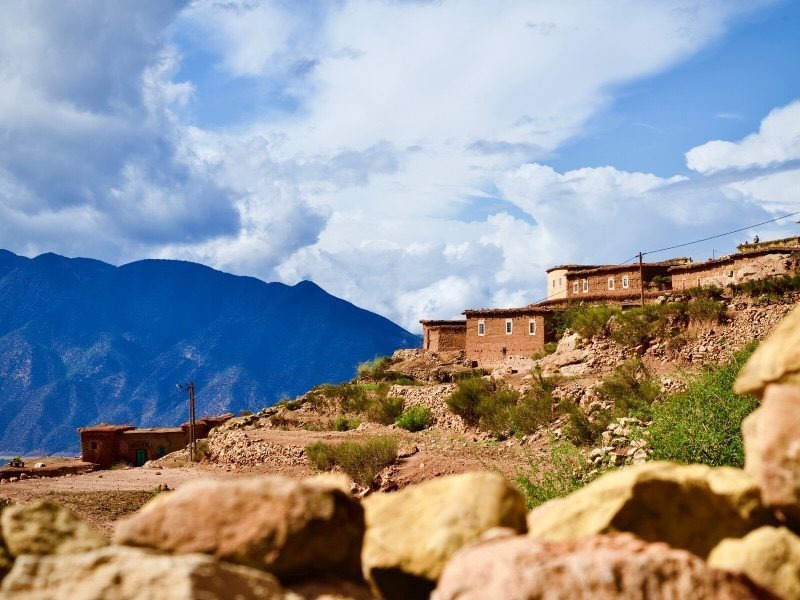
The Amazigh of Morocco Today
Attempts to quantify the Amazigh population in Morocco often rely on artificial distinctions that obscure historical reality. Amazigh identity constitutes the deep cultural and ancestral substrate of Moroccan society as a whole. Linguistic Arabization and cultural layering did not replace Amazigh origins; they were built upon them. As such, Amazigh heritage in Morocco is not a minority trait but an established foundation that cuts across regions and social classes.
Amazigh populations are found across North Africa, including Algeria, Tunisia, Mauritania and Mali. Contemporary Moroccan identity is therefore best understood as the result of continuous Amazigh presence intertwined with later historical influences, rather than as a division between ethnic categories. Expressions of Amazigh pride is visible in art, language, clothing, and public symbols, this reflects a process of reclamation rather than rediscovery. In 2014, the Moroccan state lifted restrictions on Amazigh names, formally acknowledging what had long existed in lived reality. This renewed visibility is also reflected in public celebrations such as Yennayer, the Amazigh New Year, which is increasingly marked across Morocco and celebrated more openly through shared meals, music, and gatherings.
Earlier narratives attempted to geographically compartmentalize Amazigh identity, associating it primarily with mountainous regions such as the High Atlas, Middle Atlas, and Rif. This framing is misleading. Amazigh presence has always extended across Morocco’s mountains, plains, valleys and cities. While certain regions have preserved stronger linguistic continuity due to geography and historical autonomy, Amazigh identity itself has never been spatially confined. Moroccan urban centers, like rural areas, are equally shaped by Amazigh lineage, customs and social structures.
In some portrayals, Western perspectives have falsely characterized the Amazigh as predominantly nomadic. While nomadism did exist among certain tribes, this stereotype obscures the fact that Amazigh societies engineered complex agricultural systems, trade routes and commercial networks linking Sub-Saharan Africa to the Mediterranean. Most Amazigh communities historically lived as farmers, traders, artisans and merchants, adapting to diverse environments across the country, including regions at the edges of the Sahara Desert.
Seen in full, Morocco’s language, landscapes, and everyday practices reflect a continuity that predates the categories later imposed on them. Amazigh history and presence are evident in how people speak, build, farm, trade, and organize life across the country. Moving through Morocco means moving through that continuity, without clear boundaries separating past from present or identity from place.
Planning Your Trip to Morocco ?
Understanding Amazigh culture isn’t an added layer to your trip. It’s the foundation of what you’re experiencing, whether you notice it immediately or not.
Explore more articles:
- Amazigh New Year (Yennayer)
- Moroccan Phrases: Essential Moroccan Arabic Words Every Traveler Should Know
- A Complete Guide to Chefchaouen
The more context you have before arriving, the more Morocco reveals itself beyond the surface.
FAQ: Amazigh Culture in Morocco
Who are the Amazigh people?
The Amazigh are the indigenous people of North Africa, and in Morocco, they form the historical and cultural foundation of the population itself. Amazigh identity is not separate from Moroccan identity; it is deeply embedded within it.
Are Moroccans Amazigh?
In large part, yes. Moroccan identity is the result of centuries of cultural layering, but those layers were built upon an Amazigh foundation that remains present across regions, families, and ways of life today.
Is it correct to say “Berber”?
The term “Berber” is widely used but historically carries derogatory origins. “Amazigh,” meaning “free people,” is the more accurate and respectful term.
Where is Amazigh culture found in Morocco?
Amazigh culture is not confined to specific regions. It exists across Morocco, in cities as much as in rural areas, shaping language, architecture, social structures and everyday life.
About the Author

Ahlam Morjani is a Tangier-based writer, aspiring psychologist, and devoted animal lover. When she’s not immersed in her work or studies, she’s exploring the intersections of cinema, philosophy and self-development through her articles.
She loves to spend her days feeding the city’s strays that roam the medina’s narrow streets or settling into the worn velvet seats of Tangier’s old cinemas, finding profound inspiration within these spaces that resonate with her explorations into film and art, societal nuances, and the very joie de vivre of life itself.
Photos by Amina Lahbabi and Lucas Peters. Lucas is the principal photographer and author of the Moon Guidebooks: Morocco as well as Marrakesh and Beyond published by Hachette. He edited and contributed to the Our Morocco anthology and helps the travelers of Journey Beyond Travel experience the adventure of a lifetime. He lives in Tangier with his family.