If your trip to Morocco falls right after Ramadan, you may arrive as the country begins celebrating Eid al-Fitr. Travelers often notice the holiday while planning their itinerary and wonder how it might shape their experience. Shops may close for the day, families gather at home, and a warm, festive spirit fills the streets as people exchange greetings and children play around.
For Moroccans, Eid al-Fitr marks more than the end of Ramadan — it’s a tangible moment of joy after a month of fasting, from sunrise to sunset. Mornings begin with prayer, homes fill with the scent of freshly baked sweets, and families open their doors to a flow or relatives and visitors. For travelers, it’s one of the most heartfelt and vibrant moments to witness Moroccan life and traditions.
What Is Eid al-Fitr? The Celebration That Marks the End of Ramadan
Eid al-Fitr begins with the sighting of the new moon. The exact date shifts slightly each year. It marks the close of Ramadan, a month during which Muslims fast during daylight hours.
In the Muslim calendar, there are two major holidays: Eid al-Fitr and Eid al-Adha. While Eid al-Adha comes later in the year, Eid al-Fitr is often seen as the more festive and intimate of the two—centered on home, family, and shared meals after a month of self-discipline.
When the fast ends, celebration begins, with gratitude, generosity and togetherness. A key part of this is Zakat al-Fitr, a form of charity given before the Eid prayer. It ensures that everyone, regardless of means, can take part in the day. In simple terms, it’s about making sure no one is left out, so every family can share in the joy, the food, and the sense of celebration.
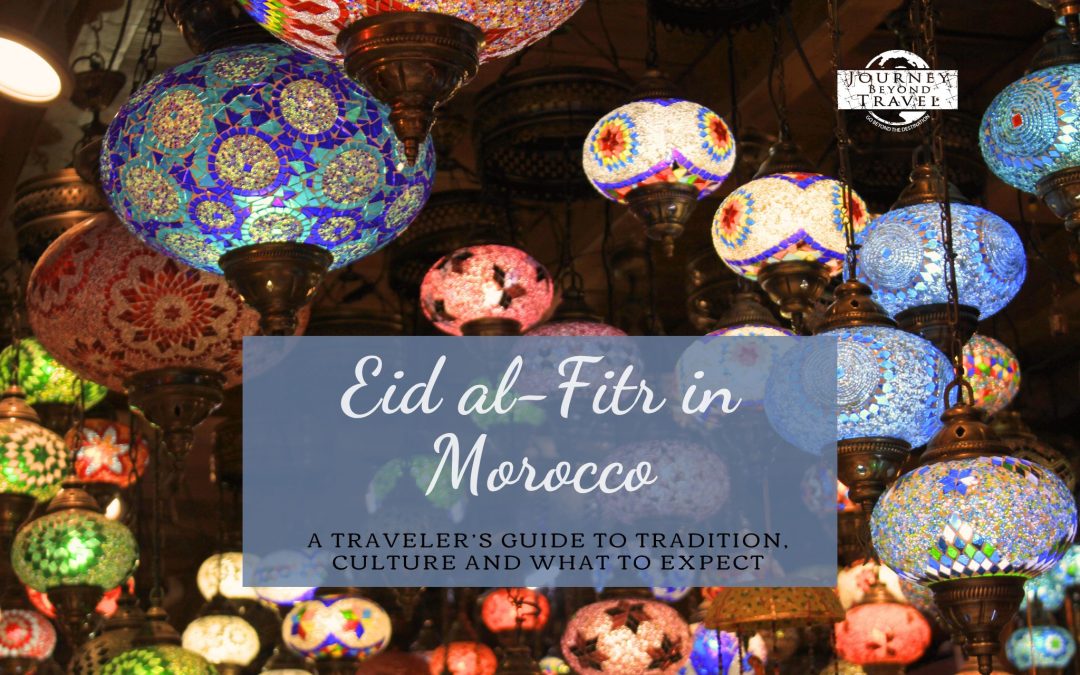
In Morocco Eid al-Fitr unfolds over several days, though the first day carries a special kind of energy. Homes fill up with joy, music, chatter and laughter. Streets fill up with lights, entertainment, new outfits and evening strolls.
The Morning Prayer
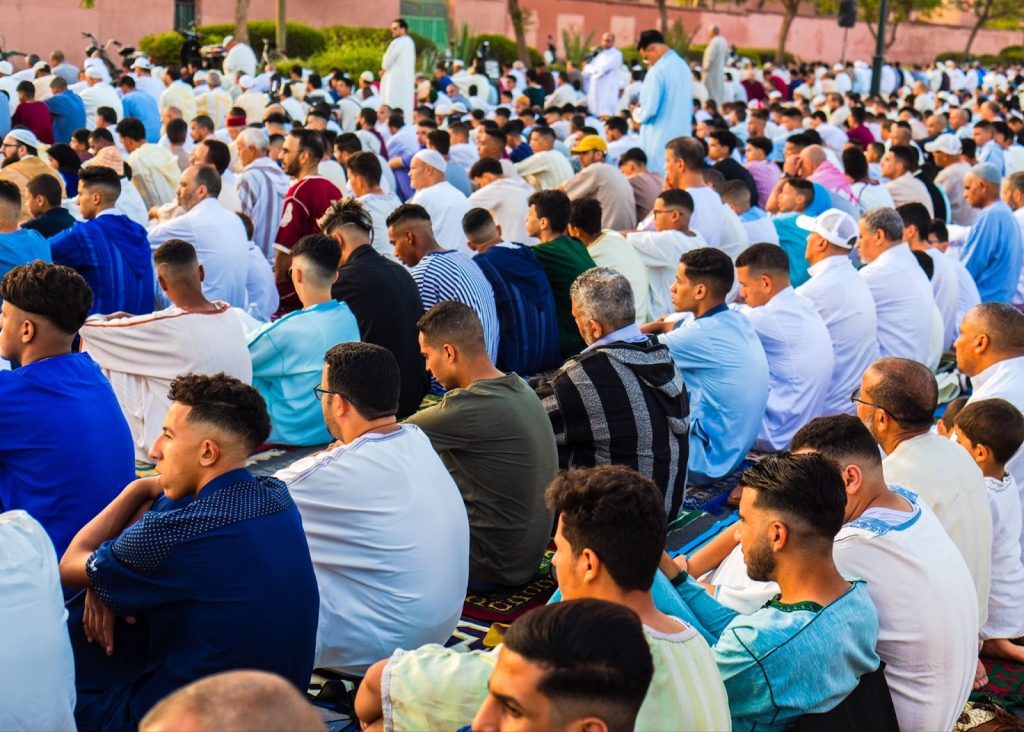
Eid starts early. Shortly after sunrise, large groups gather for a special prayer held in mosques or open prayer grounds.
In cities across Morocco, men and boys walk together toward the mosque wearing freshly pressed clothes, often traditional garments such as djellabas (also jellabas) or gandouras. Streets near mosques fill with people heading in the same direction. A shared rhythm for everyone!
After the prayer, people greet each other warmly, exchanging the phrase “Eid Mubarak,” which means “Blessed Holiday.” Friends and neighbors often stop for brief (or longer) conversations before heading home to begin family visits.
A Day of Family Visits and Open Doors
From mid-morning onward, the day belongs to family and friends.
Families begin moving from house to house, greeting parents, grandparents, aunts, and uncles. In many neighborhoods you may see small groups walking together, carrying trays of carefully arranged boxes of pastries, laid out homemade sweets, or small gifts for children.
And woven quietly into all of this generosity is the spirit of giving that began earlier in the day. The same intention behind Zakat al-Fitr (that everyone should be able to celebrate) carries into these visits, in the way food is shared freely, guests are welcomed without hesitation, and no one leaves empty-handed.
Grandparents’ homes frequently become the heart of it all — a place where generations gather, cousins reunite, older family members catch up and stories are shared ver endless rounds of tea.
Inside homes, tables are quickly filled with food prepared in the days leading up to Eid. Plates of cookies, pastries, and other sweets are placed in the center of the table while mint tea is poured for guests. Doors open and closes as relatives visit throughout the day. The abundant trays of treats circulate continuously. Conversations stretch for hours, punctuated by laughter, greetings, and the arrival of the next group of guests.
Moroccan Flavors of Eid
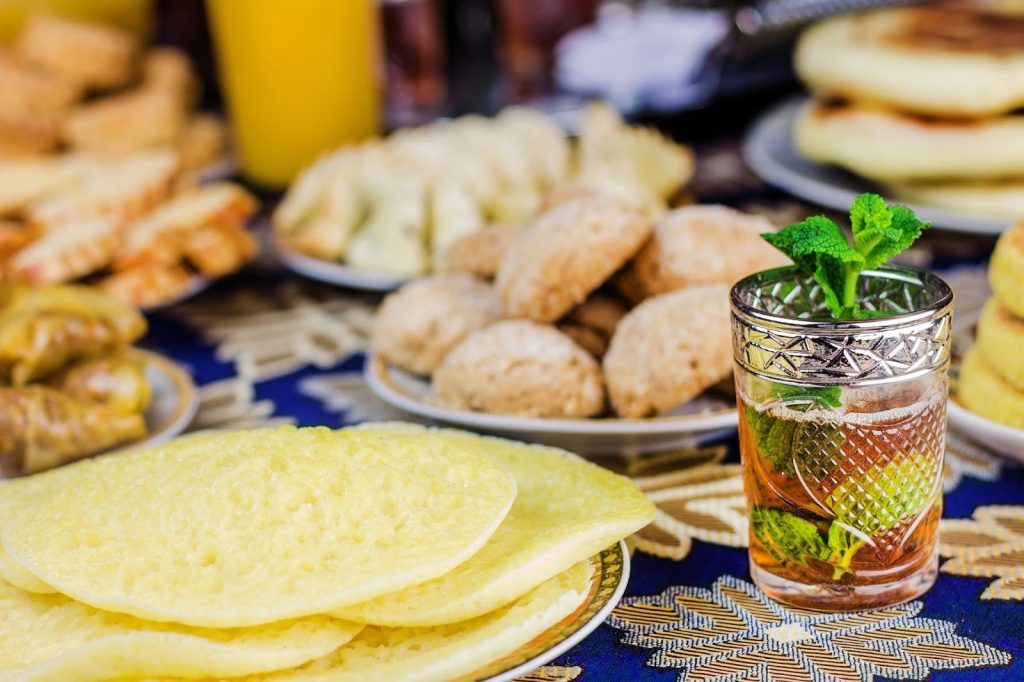
Many Moroccan households spend the final days of Ramadan baking for Eid. They turn into real workshops, with everyone – even the littles – helping.
You’ll find delicate
- Kaab el ghzal (gazelle horns filled with almond bb paste),
- Crumbly Ghriba cookies (soft almond or sesame butter biscuits),
- Crunchy Fekkas (a type of biscotti with dried fruits)
- Chebakia (one of Ramadan favorite honey-coated pastries),
- Sellou (also known as sfouf, another Ramadan energy-boosting favorite), and much more.
In addition to these sweets, many families also prepare simple comforts that appear on almost every table: Plates of warm msemen, the layered Moroccan flatbread often served with orange-blossom flavored honey and butter; spongy Baghrir, the soft Moroccan pancakes known for their tiny holes that absorb honey and melted butter, homemade cakes and a few other stuffed pastries.
Even local bakeries join in. In the days leading up to Eid, their displays overflow with neatly packed trays of pastries and cookies, ready for customers to mix and match before visiting relatives.
And here, too, the spirit of Eid quietly reveals itself. These generous spreads are not just about indulgence. They reflect a deeper idea: that food is meant to be shared. Whether through a formal act of charity or a plate offered to a guest, the intention is the same: Abundance only truly matters when it reaches others.
In the meantime, the tea continues to flow….
What Travelers Will Notice During Eid al-Fitr
If you’re in Morocco during Eid al-Fitr, you will see the shift in the air.
Many people wear new clothes that day, often purchased specifically for the holiday. Children might be dressed in small djellabas, colorful dresses, or carefully chosen outfits their parents bought in the days leading up to Eid. For them, the day carries a sense of excitement that begins early in the morning. It is also common for children to receive small gifts or envelopes of money from parents, grandparents, or visiting relatives. They often hold onto these carefully throughout the day, comparing what they received with cousins or planning what they might buy later.
As a Moroccan woman, preparing for Eid is part of the celebration itself. In the two days leading up to it, hair salons and hammams are completely full, with many staying open late into the night, sometimes until 4 a.m. After deciding what to wear, whether it’s a djellaba, a caftan, or a Moroccan-style kimono, most women follow a similar ritual: a visit to the hammam, followed by hairstyling, manicures, and the final details. By the next day, women step out fully put together, dressed elegantly, light makeup done, and perfume lingering. Some also choose to decorate their hands with henna, adding another layer to the celebration.
Families move between homes during the day, visiting parents, grandparents, aunts, and uncles. Living rooms fill with guests arriving in waves. Trays of pastries and cookies are placed on the table, and mint tea is poured again and again as people sit down to talk. Children move between rooms playing together, sometimes opening small toys or gifts they received from relatives.
In the morning, the streets may seem unusually calm. Many shops are closed, and daily routines pause as families gather indoors. But behind those doors, life is anything but quiet.
By late afternoon, the energy spills back outside. Families head out for walks along the seaside, through parks, down the main downtown boulevards or into neighborhood squares. Children run ahead, playing with cousins and showing off their new clothes and toys. Adults linger in conversation on benches while watching the street lights and the joyfulness around.
Do Businesses Close During Eid al-Fitr?
Yes, many businesses close on the first day of Eid.
Small neighborhood shops, offices, and local cafés often shut their doors so employees can celebrate with their families.
Large hotels, transportation services, and many restaurants in tourist areas remain open, especially in large cities like Marrakech, Tangier, Fez, and Casablanca.
By the second day, many shops reopen and daily life gradually resumes.
Visiting Morocco During Eid al-Fitr
Some travelers worry about visiting Morocco during Eid. In reality, it offers a rare glimpse into Morocco at its most intimate.
On the first day of Eid, many small shops, neighborhood cafés, and offices remain closed while people visit relatives and host guests at home. Streets in residential areas can look calmer than usual during the morning for this reason. Tourism services continue operating, however. Hotels and riads receive guests as usual, transportation runs normally, and restaurants in tourist areas often remain open.
By the second day, many businesses begin reopening and daily activity gradually returns.
There is a pause, yes, but it’s a meaningful one. While logistics continue smoothly for visitors, the country turns its focus inward, toward family, hospitality, and keeping that tradition alive.
You will get a chance to witness a side of Moroccan life that is authentic and pure. Greeting someone – even strangers in the street – with “Eid Mubarak” is always appreciated, and many locals respond warmly when travelers show curiosity about the celebration.
Experiencing Eid in Morocco: A Look at Local Family Traditions
Eid al-Fitr reveals a side of Morocco that many travelers do not always see.
It’s in the open doors, the constant flow of tea, the laughter of relatives reuniting, and the rhythm of visits and promenades that last all day. It’s in the trays of sweets passed from hand to hand and the sense that, for this one day, everything else can wait.
If you find yourself in Morocco during Eid al-Fitr, you will be stepping into a day when everyone turns toward family living rooms rather than cafés and markets. You will be catching a glimpse of a deeply intimate moment. One that is shared by muslims throughout the world, and one that marks the end of Ramadan with generosity, joy and celebration.
About the Author

Ahlam Morjani is a Tangier-based writer, aspiring psychologist, and devoted animal lover. When she’s not immersed in her work or studies, she’s exploring the intersections of cinema, philosophy and self-development through her articles.
She loves to spend her days feeding the city’s strays that roam the medina’s narrow streets or settling into the worn velvet seats of Tangier’s old cinemas, finding profound inspiration within these spaces that resonate with her explorations into film and art, societal nuances, and the very joie de vivre of life itself.