The holy month of Ramadan is a cherished time for Muslims around the world. If you find yourself in Morocco during this sacred period, you’ll not only experience the spiritual depth of fasting but also discover the unique culinary traditions that accompany it, like those treats boosting your energy.
For me, Ramadan has always had a special scent. Long before the moon was sighted by the Ministry of Islamic Affairs, as children we could already feel the month approaching through the smells drifting up from every house in our neighborhood: toasted almonds, warm sesame seeds, and honey gently heating on the stove. With my cousins, we would lean over balconies and open windows, trying to guess which neighbor had started preparing Shebbakia or Sellou first.
A Tradition of Nourishment
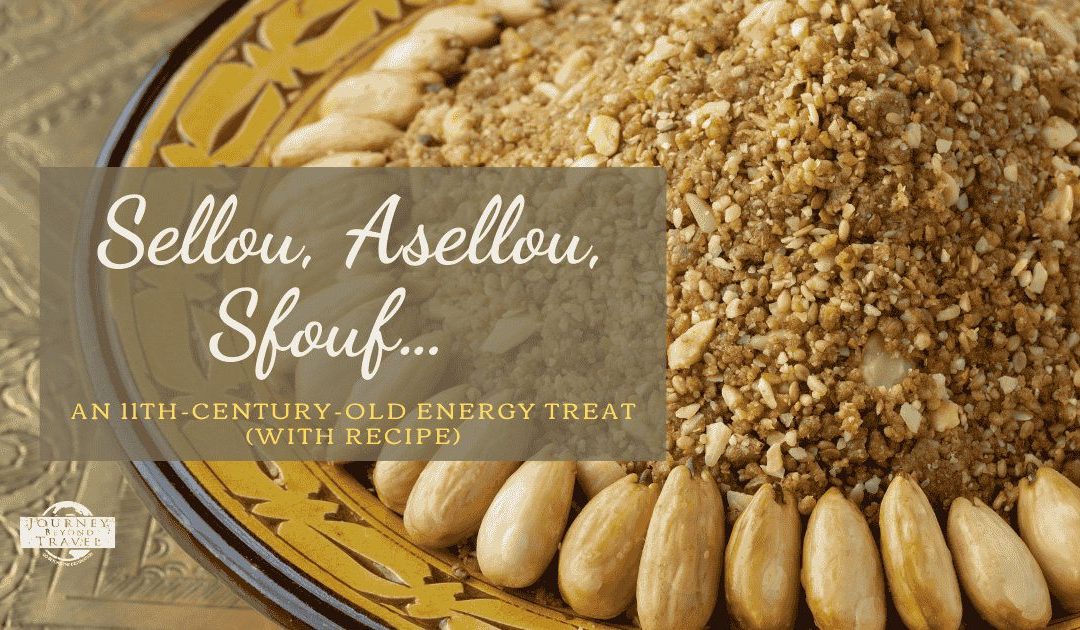
Before Ramadan begins, Moroccan households prepare an assortment of energy-boosting treats to sustain them through the long fasting hours. Among these special delicacies, served alongside the intricate, honey-drenched Shebbakia, is Sellou, also known as Sfouf, Slilou, or Zemmita, depending on the region.
This rich and flavorful treat is a nutritious blend of toasted flour, ground almonds, sesame seeds, anise, fennel, and cinnamon. With its warm, nutty profile, Sellou has been a staple for centuries, providing essential nourishment during Ramadan.
In my family, Sellou was never something we bought. We still don’t! It was always something that took over the kitchen for an entire afternoon. My mother would tie on her apron, a scarf over her head to hold her hair in place; line up bags and jars of ingredients and a large dish; and start the slow, careful process of toasting, grinding, mixing and kneading. The kitchen would fill with a deep, comforting aroma that felt like Ramadan itself taking shape.
Even today, that smell instantly brings me back to childhood — sitting at the table, sneaking spoonfuls when I thought no one was looking.
A Legacy from the 11th Century
The origins of Sellou reportedly trace back to the Amazigh culture during the Almoravid dynasty in the 11th century. Initially, the recipe was simple: toasted grains, a fat component, and a sweetener — most commonly wheat, butter, and honey. In the Souss region where some of my ancestors come from, a variation called Bsiss emerged, using toasted barley flour, argan oil, and honey.
Over the centuries, Sellou evolved into a sophisticated, nutrient-dense energy booster packed with healthy fats, protein, fiber, and essential minerals. Today, regional variations continue to thrive, with some recipes yielding a sandy, crumbly texture, while others opt for a moist, paste-like consistency. The beauty of Sellou lies in its adaptability. One can customize the ingredients and textures to suit their personal tastes and dietary needs.
As a child, I learned very quickly that not all Sellou is created equal. One neighbor shared with us once their version that was extremely sandy and dry, and I could never bring myself to enjoy it the way their kids did. But I found my own solution: I would pour it into a bowl, add cold milk, and eat it like breakfast cereal. Problem solved!
To this day, I smile when I think about that improvised childhood hack, and how even then, Sellou found its way into my daily rhythm. I still like to mix it in my greek yogurt for a yogurt-parfait treat.
More Than Just a Ramadan Treat

While Sellou shines brightest during Ramadan, its appeal extends beyond the fasting month. It is a staple in Moroccan celebrations such as weddings, baptisms, and postpartum recovery. New mothers, in particular, are traditionally offered generous servings of Sellou to replenish their energy during the 40 days following childbirth and throughout breastfeeding.
I experienced this tradition in the most personal way. Before I gave birth to my first child in Paris, my mother came to visit us with a giant batch of Sellou in her suitcase for me, making sure I had enough to regain strength and feel cared for. Years later, when I had my second child in Tangier, she did it again! This time filling my kitchen with that same familiar smell I remembered from childhood.
It ’s more than a treat. It’s the feeling of being wrapped in something ancient, loving, and just… deeply Moroccan.
In many ways, Sellou is Morocco’s original energy ball—long before energy balls became a trendy health food. It’s essentially a deconstructed version of the modern-day power snack, packed with wholesome ingredients.
Today, the tradition continues with my own children. They stand on stools beside me, pouring sesame seeds, sneaking tastes of almonds, and asking when Ramadan will finally start so we can eat Sellou. Their excitement mirrors my own from years ago.
And every time the scent of honey, warm spices, and toasted nuts fills the house, I realize that Sellou is not just a recipe. It’s memory. It’s comfort. It’s continuity, passed from generation to generation, one fragrant batch at a time.
I am sharing with you below a recipe for Sellou, and my own healthier take on it, with hopes that you will find it as nourishing and comforting as I do — whether you observe Ramadan or not.
Traditional Sellou Recipe
This classic version is rich in warm spices, toasted nuts, and seeds, providing a balanced blend of complex carbohydrates, healthy fats, and natural sweetness.
Ingredients

Dry Ingredients:
- 1 kg all-purpose flour (white or whole wheat)
- 500 g sesame seeds
- 500 g whole almonds
- 100 g powdered sugar (optional, adjust to taste)
- 1 tbsp ground anise
- 1 tbsp ground fennel seeds
- 2 tbsp ground cinnamon
- 1.5 tbsp ground nutmeg
- A pinch of salt
- 1/2 tsp (or 5–7 droplets) mastic gum
- 1 tsp granulated sugar
Wet Ingredients:
- 150–200 g butter
- 150 g honey
To Decorate:
- A handful of raw almonds, blanched and fried
Instructions
- Toast the Flour:
- Preheat the oven to 180ºC.
- Spread the flour evenly on a baking tray and bake for about 30 minutes, stirring every 5 minutes to prevent burning.
- Remove once golden brown, break up lumps, and sift if necessary.
- Let cool.
- Toast the Almonds and Sesame Seeds:
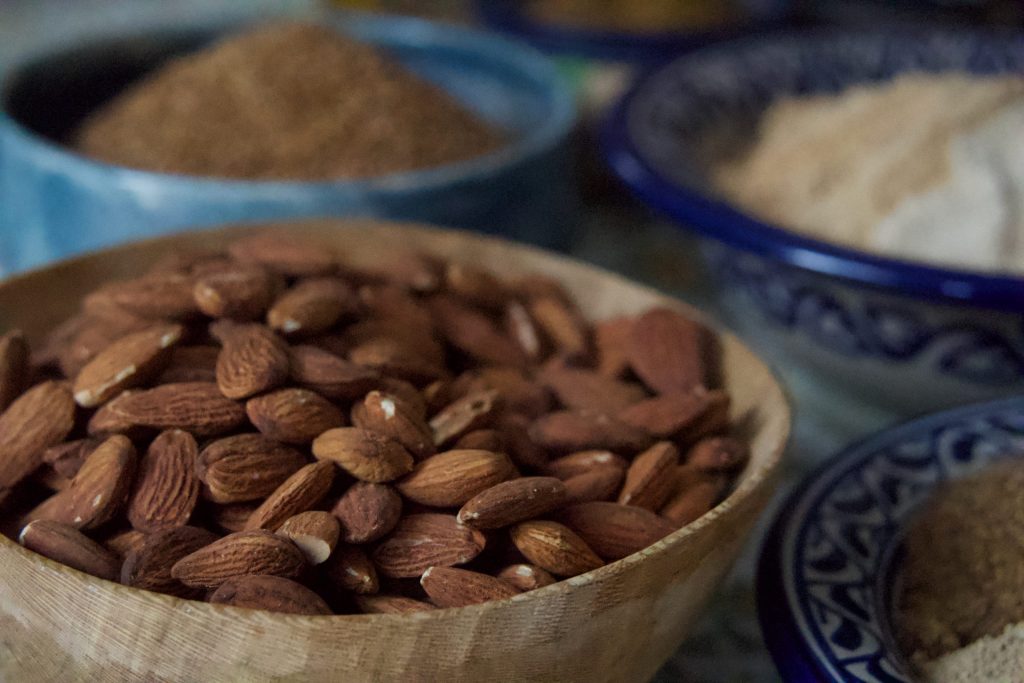
- Toast the almonds and sesame seeds separately in a pan over medium-low heat, stirring frequently for about 20 minutes until fragrant.
- Alternatively, you can use pre-toasted almonds and sesame seeds.

- Grind the Nuts and Seeds:
- Grind almonds into a fine powder (or leave slightly coarse for texture).
- Grind sesame seeds into a fine powder or process into a paste (like tahini) for a richer consistency.
- Prepare the Mastic Gum:

- Crush mastic gum with 1 tsp granulated sugar using a mortar and pestle or an electric grinder.
- Melt the Butter and Honey:
- Melt butter over low heat, skimming off any milk solids to enhance shelf life.
- Warm the honey until it becomes fluid.
- Mix the Ingredients:
- In a large bowl, combine the toasted flour, powdered sugar, almonds, sesame seeds, spices, and salt.
- Add the melted butter and honey gradually, kneading with your hands until the mixture reaches your desired texture (sandy or compact).
- Garnish and Serve:
- Blanch raw almonds in boiling water, peel, then fry until golden.
- Use them as decoration before serving.
A Healthier Take: Amina’s Refined-Sugar-Free Version
This dairy-free and refined-sugar-free version incorporates a mix of nutrient-dense flours and natural sweeteners for an even healthier boost.
Ingredients
Flours:

- 250 g toasted whole wheat flour (or chickpea flour for gluten-free)
- 125 g toasted soy flour
- 125 g toasted millet flour
- 125 g toasted oat flour
- 125 g toasted wheat bran
- 80 g ground flaxseeds (optional)
- 80 g toasted chickpea flour (optional)
Nuts & Seeds:
- 350 g toasted whole almonds (or 250 g almonds + 250 g cashews)
- 350 g sesame seeds, ground into paste with sesame oil (tahini)

Spices & Seeds:
- 80 g chia seeds
- 50 g ground fennel seeds
- 50 g ground anise seeds
- 1 whole nutmeg, grated
- 50 g ground cinnamon
- A pinch of salt
- 1 tsp ground mastic gum

Soft Ingredients:
- 125 g warmed honey (adjust to taste)
- 150 ml argan oil (preferred, or a mix of melted coconut oil and sesame oil)
- 100 ml sesame oil
- 100 ml olive oil (adjust to taste)
Instructions
- Toast the Flours & Seeds:

- Toast each type of flour separately, stirring frequently to prevent burning.
- Grind flaxseeds and mix them into the flour.

- Prepare the Nut Butters:

- Grind almonds with argan oil into a smooth butter.
- Grind sesame seeds with sesame oil into tahini.
- Mix the Dry Ingredients:
- Combine all toasted flours, spices, and seeds in a large bowl.
- Incorporate Wet Ingredients:
- Add almond and sesame butters.
- Gradually pour in honey and oils, mixing until well incorporated.
Storage Tips
- Store Sellou in an airtight container in a cool, dry place.
- No refrigeration is needed; it keeps well for up to two months.
- Over time, the mixture will release its natural oils, making it even more flavorful. When the oil separates, just give it a stir.

Recipe Note: Every family has its own Sellou recipe, making it one of the most adaptable Moroccan treats. If you’re trying it for the first time, consider making a half batch to test and adjust flavors.
Bessaha!
About the Author

Amina Lahbabi is a proud Moroccan, feminist, mother, climate change activist, and promoter of education, equal rights and freedom of expression. She is at the forefront of all of Journey Beyond Travel’s NGO initiatives. She loves art, freedom of expression, and is an accomplished photographer in her own right. She holds multiple graduate degrees in translation and communication and was a Fulbright Scholar at Michigan State University. She also loves a good hammam and good food. She lives in Tangier. You can check out her Wikipedia.