
Eclectic Jordan
Highlights & Hidden Delights
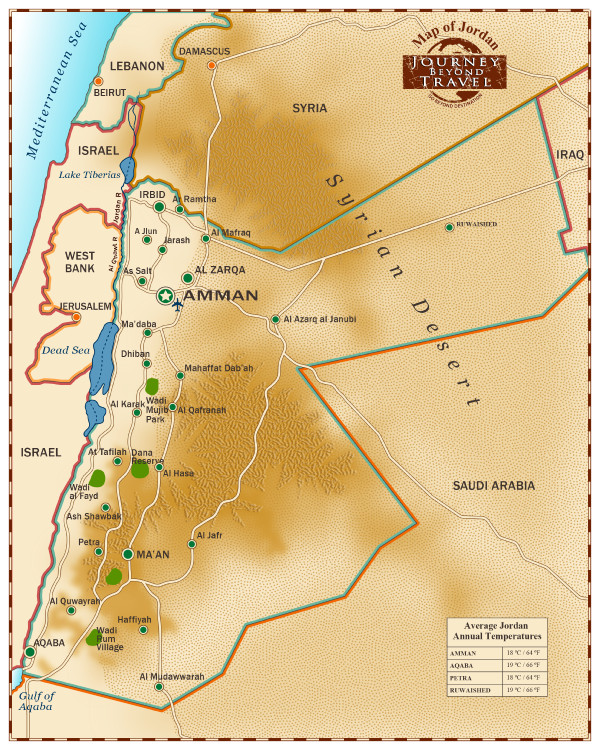
The itinerary below is an example of what we can and have put together. We can use this as a base for your own customized journey.
Signature
Classic Itinerary with 3/4-star accommodation- Everything outlined in the boutique package with signature accommodation
Boutique
Classic Itinerary with 4-star accommodation- Expert custom itinerary creation
- Airport transfer (arrival & departure)
- Handpicked 4-star hotels and unique desert camps
- All breakfasts
- Lunches, dinners, and other meals as indicated
- Personalized, private guided tours of Amman, Petra, Wadi Rum, Jerash, Madaba, Mount Nebo, and the Dead Sea
- Entry to select archaeological sites and museums (including Petra by Night, Jerash ruins, Wadi Rum desert safari, and Dead Sea resorts)
- City-to-city transfers by private vehicle
- In-city transfers by private car or appropriate transport
- Authentic experiences like sunset camel rides, Bedouin dinners, stargazing in Wadi Rum, cooking classes, and floating in the Dead Sea
- Dedicated journey support
- Flights and insurance not included
Boutique Plus
Classic Itinerary with 4/5-star accommodation- Everything outlined in the boutique package with boutique plus accommodation, desert lodges, or Dead Sea spa resorts
- Private driver throughout your entire journey
Pricing shown is an estimate. Prices will vary according to season, exchange rate, and other factors. Our tours are all private. Feel free to contact us with any questions you may have.
Check Out the Full Itinerary
Day 1: Arrival in Amman
Upon landing at Queen Alia International Airport, you’ll be greeted and transferred to your hotel in Amman. Depending on your arrival time, take the opportunity to relax or explore the vibrant streets of the capital. Amman sprawls across a series of hills, where layers of history unfold at every corner – from ancient Roman ruins and Ottoman-era mosques to buzzing cafés and contemporary art galleries. Walk through the lively streets lined with falafel stands, artisan shops, and fragrant spice stalls, where old traditions blend seamlessly with modern Jordanian life; lose yourself in the lively souks of downtown Amman, where shopkeepers call out their wares amid a kaleidoscope of spices, textiles, and local sweets. Whether you take a sunset stroll through the bohemian district of Jabal Al-Weibdeh or sip cardamom-laced coffee at a rooftop café overlooking the city’s golden stone skyline, your first taste of Amman will already hint at the journey of contrasts and wonders ahead.
Day 2: Amman and Desert Castles – Qasr Al-Kharanah, Qasr Amra, and Qasr Al-Azraq
Begin your day high above the city at the Amman Citadel (Jabal al-Qal’a), a dramatic hilltop site that has been continuously inhabited since the Bronze Age. As you walk through its weathered paths, you’ll encounter silent sentinels of Jordan’s layered past – from Roman columns reaching toward the sky to the graceful ruins of the Byzantine Church, and the elegant, dome-capped Umayyad Palace, with its grand ceremonial hall and hints of Islamic artistry. Pause at the Temple of Hercules, whose towering hand-shaped relic lies among fallen columns, hinting at the scale and ambition of Roman architecture. From here, descend into the heart of downtown to visit the Roman Theater, a 6,000-seat masterpiece carved into the hillside in the 2nd century CE. Imagine the roar of ancient crowds as you gaze out over the stone benches, still used today for concerts and performances. The adjacent Folklore and Popular Traditions Museum offers a glimpse into Jordan’s rural past, with displays of traditional dress, crafts, and Bedouin life.
You will then leave the bustling capital behind and venture eastward into the windswept expanses of the Jordanian desert, where echoes of a bygone empire linger in solitude. Scattered across the arid plains like mirages, the Umayyad desert castles await – remarkable relics from the 7th and 8th centuries that once served as retreats, caravanserais, and hunting lodges for caliphs and nobles of the early Islamic world. Your first stop is Qasr Al-Kharanah, its formidable rectangular silhouette rising unexpectedly from the barren earth. Though often mistaken for a military fortress due to its imposing façade and arrow-slit windows, Qasr Al-Kharanah’s true purpose remains shrouded in mystery – perhaps a rest stop for traders, perhaps a meeting hall for tribal leaders. Next, you’ll continue to Qasr Amra, a true jewel of Islamic art and architecture and a UNESCO World Heritage Site. Modest in size but rich in detail, this former royal bathhouse reveals a world of Umayyad luxury and sophistication. Inside, you’ll be greeted by stunning frescoes that adorn the walls and domed ceilings, depicting everything from hunting scenes and courtly pleasures to astrological signs and mythological creatures. The final stop of your desert journey is Qasr Al-Azraq, constructed from striking black basalt stones and steeped in layers of history. Situated in a lush oasis where water once flowed freely, the castle gained prominence centuries after its construction when it became the headquarters of T.E. Lawrence, better known as Lawrence of Arabia, during the Arab Revolt in 1917. As the sun begins to dip behind the dunes, casting golden hues across the horizon, you’ll return to Amman.
Day 3: Jerash and Ajloun with Orjan Village Homestay
After breakfast, you will depart Amman and journey north through the fertile hills of Gilead toward Jerash, one of the most spectacular and best-preserved Greco-Roman cities outside Italy. Often referred to as the “Pompeii of the East,” Jerash unfolds like an open-air museum, revealing layer upon layer of ancient civilization. Upon arrival, you will walk through Hadrian’s Arch, an imposing triple-arched gateway built to honor Emperor Hadrian’s visit in 129 CE. From there, enter the city proper and begin your exploration along the colonnaded Cardo Maximus, the main street that once bustled with merchants, chariots, and citizens in togas. Admire the ruts carved into the stone by ancient wheels and notice the underground drainage system – a marvel of Roman engineering. You will then make your way to the Oval Plaza, an elegant forum encircled by 56 Ionic columns, where religious, political, and social life once converged. Visit the Temple of Zeus, perched on a hill with sweeping views over the ruins, and descend to the South Theater, which once seated up to 3,000 spectators. If you’re lucky, you might even hear the traditional Jordanian bagpipe performers who still demonstrate the acoustics today. Continue on to the North Theater, the Nymphaeum (a grand public fountain), and several Byzantine churches adorned with ancient mosaics.
Enjoy a home-cooked farm-to-table lunch, where each dish is a celebration of Jordan’s northern culinary heritage – everything from freshly baked bread and aromatic stews to rich dips made from seasonal, locally sourced produce. This is more than just a meal; it’s a heartfelt exchange and a chance to experience daily village life!
Continue your journey through olive groves and pine-covered hills to reach Ajloun, a region known for its cooler climate and green landscapes. Here, you’ll visit the Ajloun Castle (Qal’at Ar-Rabad), a formidable 12th-century fortress commissioned by one of Saladin’s generals during the Crusader period. The castle was strategically placed to control the route between Damascus and the Jordan Valley, and to protect local iron mines. Climb to the top for breathtaking panoramic views stretching across the surrounding valleys and over to the West Bank on clear days. Inside, you’ll find exhibits of medieval weaponry and interactive displays that paint a picture of life during the Crusades. Return to Amman in the late afternoon.
Day 4: Madaba, Mount Nebo, and the King’s Highway
Leave the bustle of Amman behind and journey south into the heart of Jordan’s ancient highlands, where faith, artistry, and dramatic landscapes converge. Your first stop is Madaba, a city famed for its exquisite collection of Byzantine and Umayyad mosaics. Step inside the modest yet historic St. George’s Church, where the floor reveals the 6th-century mosaic map of the Holy Land – the oldest known geographic depiction of the region. This remarkable artwork, crafted from over two million colored tiles, once guided pilgrims to sacred sites and still stirs awe with its intricate detail, showing Jerusalem, Bethlehem, the Jordan River, and the Dead Sea with remarkable clarity. Create your own mosaic at a fun mosaic-making workshop!
Next, ascend to the windswept ridge of Mount Nebo, a site steeped in biblical significance. According to tradition, it was here that the prophet Moses stood gazing across the Jordan Valley, granted a glimpse of the Promised Land he would never enter. As you walk through the modern memorial church that protects ancient mosaics depicting scenes of pastoral life and hunting, step out onto the scenic lookout. From this panoramic vantage point, the landscape unfolds in layers—the Dead Sea glimmering below, the silver ribbon of the Jordan River, and, on clear days, the distant silhouette of Jerusalem shimmering on the horizon. The view feels timeless, imbued with spiritual resonance and a sense of stillness.
From Mount Nebo, your path follows the storied King’s Highway, one of the oldest continually used trade routes in the world, once traversed by kings, merchants, and prophets. Wind through arid hills and cultivated plateaus before reaching the dramatic cliffs of Wadi Mujib, often called “Jordan’s Grand Canyon.” Its sheer rock faces, streaked with desert hues of ochre and rust, plunge down to a ribbon of green, where the Mujib River flows toward the Dead Sea. As the sun begins to cast long shadows across the hills, you’ll continue to the tranquil and picturesque village of Dana, nestled on the edge of the Dana Biosphere Reserve, Jordan’s largest nature reserve. Perched atop a rocky escarpment, the stone-built village offers sweeping views over a vast wilderness of gorges and mountains. Settle into your eco-lodge or guesthouse for the night, where the scent of herbs from nearby gardens drifts in with the breeze and stars brighten the clear desert sky.
Day 5: Dana Biosphere Reserve, Shobak Castle and Little Petra
Begin your day immersed in the raw beauty of the Dana Biosphere Reserve, Jordan’s largest and most ecologically diverse nature sanctuary. Stretching from the rugged cliffs of the Great Rift Valley down to the arid lowlands of Wadi Araba, Dana is a breathtaking mosaic of wooded highlands, windswept plateaus, sandstone canyons, and stony desert plains. With your local guide, set off on a scenic hike through the reserve, following ancient shepherd trails that wind through juniper forests and across wild, untamed terrain. As you walk, your guide will point out the unique flora and fauna. You will then return to the stone-built village of Dana, perched like a guardian on the edge of the cliff. Wander through its narrow, winding alleys, where traditional Ottoman-era homes cling to the mountainside and the scent of firewood and mint tea drifts on the breeze.
Embark on a scenic journey southward, where the rolling hills and rugged plateaus gradually lead you to the imposing silhouette of Shobak Castle, a solitary Crusader fortress rising proudly from a hilltop. Built in 1115 by King Baldwin I of Jerusalem during the Crusader period, this fortress—once known as Mont Realis or “Royal Mountain”—tells tales of sieges, resilience, and centuries of power struggles. As you ascend the winding path to its gates, feel the wind rush across the open landscape and imagine what life must have been like for the knights who once patrolled these high stone ramparts. Wander through its weathered towers, secret passageways, and crumbling courtyards, and gaze out over the vast valleys below, where the green of distant orchards contrasts against the dusty rose of the surrounding cliffs. From here, you will continue to the hidden marvel of Siq al-Barid, affectionately known as Little Petra. Tucked into a narrow sandstone gorge, this smaller, more intimate sister site to Petra once served as a suburb for Nabataean traders and travelers. As you walk through the slender entrance gorge, the stone suddenly opens up to reveal carved façades, ancient staircases, water cisterns, and faded frescoes still clinging to the rock walls. Less crowded and more atmospheric than its famous counterpart, Little Petra invites a slower pace – giving you time to imagine caravans arriving from Arabia, laden with incense and spices, pausing here to rest before entering Petra itself!
Day 6: Petra
Immerse yourself fully in the breathtaking wonder of Petra, the ancient Nabatean city that has stood the test of time, carved into the very heart of Jordan’s rose-colored sandstone cliffs. As the sun rises, casting long shadows over the desert, begin your day with a walk through the Siq, the narrow, winding gorge that acts as the gateway to this legendary city. The towering rock walls, some towering as high as 200 meters, seem to close in around you, their jagged surfaces etched with centuries of history. With every step, you’re led deeper into the heart of Petra, the air cool and fragrant with the scent of desert herbs, until the Siq suddenly opens up to reveal the awe-inspiring Treasury (Al-Khazneh). This magnificent structure, with its intricately carved columns and grand facade, stands as one of the most iconic images of Petra. Its rose-red hues shift with the changing light of the day, casting an almost ethereal glow on the surroundings. Take a moment to soak in the scene, learning from your expert archaeologist guide about the secrets behind this monumental structure, believed to have been a royal tomb or a temple, and its role as a key stop for ancient caravans passing through the region. From the Treasury, you will continue your journey through Petra’s vast expanse. Wander along the Street of Facades, where towering tombs and temples carved into the rock face line the pathway, their detailed facades standing proudly against the desert backdrop. As you explore the Royal Tombs, imagine the ancient Nabatean kings and queens who once rested here in grandeur. Each tomb is unique in design, showcasing intricate stonework that speaks to the artistic mastery of its creators.
Next, you’ll make your way to the Roman Theater, a testament to Petra’s period of Roman influence, where the echoes of ancient performances still seem to resonate in the air. The theater, with its semicircular seating carved directly into the mountainside, offers a glimpse into the cultural life of the city during its prime. For those seeking a more daring adventure, embark on a challenging but rewarding hike up to Ad Deir, the Monastery. This colossal structure, often overlooked by the crowds, offers a more tranquil experience of Petra. The climb to the Monastery is a test of endurance, but the views from the top are worth every step. As you reach the summit, the grandeur of the Monastery’s facade unfolds before you, framed by the vast, open desert landscape stretching into the distance. From here, the panoramic views of Petra’s sprawling ruins and the surrounding valleys are nothing short of spectacular.
Day 7: Wadi Rum – The Valley of the Moon, with 4×4 jeep tour
Journey southward to the mesmerizing Wadi Rum, often referred to as the “Valley of the Moon” for its surreal, otherworldly landscape. As you enter this vast desert expanse, the horizon stretches endlessly before you, filled with towering sandstone mountains that rise dramatically from the earth, their jagged peaks casting long shadows across the red, undulating sand dunes. Prepare for an unforgettable adventure as you embark on a thrilling 4×4 jeep tour, guided by knowledgeable Bedouins who have lived in these harsh but beautiful lands for generations. Your guide will take you deep into the heart of Wadi Rum, showing you the most breathtaking sights of this expansive desert. You will explore hidden canyons that weave through the rock formations, their narrow paths offering glimpses of vibrant desert flora and the occasional wild creature. Pause to marvel at natural rock bridges, their graceful arches suspended high above the sand below, their surfaces carved and shaped by centuries of wind and rain. As you travel, your guides will point out ancient petroglyphs, intricately etched into the rock faces by the early desert inhabitants. These mysterious images tell stories of a time long past, offering a rare glimpse into the lives of those who called this rugged landscape home.
As the afternoon begins to fade, the desert’s atmosphere shifts. The once brilliant sun sinks lower into the horizon, casting a golden glow over the landscape and turning the desert into a painter’s palette of fiery reds, purples, and deep oranges. In the evening, you will enjoy an authentic traditional Bedouin dinner under the vast open sky. As you sit around a warm, crackling fire, your meal will be served in the classic Bedouin style, with lamb, rice, and vegetables cooked in the earth beneath the sand, infusing the food with an earthy smokiness that reflects the flavors of the desert itself, and after dinner you’ll sleep beneath a dazzling canopy of stars!
Day 8: Aqaba – The Red Sea
Today you will depart Wadi Rum in the morning, leaving behind the vast beauty of the desert as you make your way to Aqaba, Jordan’s only coastal city nestled along the warm waters of the Red Sea. The landscape gradually transforms as you approach the coast, the rugged desert hills giving way to the gentle undulations of sandy beaches and the vibrant blues of the sea. The Mediterranean-style city is a pleasant mix of modern amenities and traditional charm, with colorful markets and bustling streets that line the shoreline. The Red Sea’s waters are a vivid palette of turquoise and deep blue, and there are plenty of ways to explore beneath the surface. For those seeking adventure, Aqaba offers snorkeling and diving excursions that take you to some of the most stunning coral reefs in the world. Take a boat trip and slip into the warm waters and immerse yourself in an underwater wonderland, where brightly colored fish dart between the coral, and you may even encounter rays or sea turtles gliding gracefully through the water. In the late afternoon, after a relaxing time in the water, take a leisurely stroll along the waterfront promenade. As evening falls, head to a local seafood restaurant where you can savor fresh catches from the Red Sea, but before dinner add a splash of creativity to your Jordanian trip by learning the mesmerizing art of sand bottle making!
Day 9: The Dead Sea
Travel north to the Dead Sea, the lowest point on Earth, where the landscape transitions into a surreal vista of salt-encrusted shores and shimmering waters. Once there, experience the unique sensation of floating effortlessly in the hypersaline waters, which support you like a cushion, allowing you to relax without any effort. The mineral-rich water has therapeutic qualities that soothe both body and mind. Indulge in a mineral mud bath, known for its rejuvenating properties. The black mud is rich in salts and minerals, leaving your skin silky smooth and revitalized after you rinse it off.
Day 10: Departure from Amman, natural skincare workshop
Back in Amman, you can visit the King Abdullah I Mosque, one of Amman’s most iconic landmarks, or make your way to the Jordan Museum, home to the invaluable Dead Sea Scrolls and archaeological treasures that narrate the long and complex history of the region.
For those intrigued by natural skincare made with Dead Sea ingredients, we can arrange a visit to a charming second-generation cosmetics atelier that has been crafting soaps and skincare products since the 1930s. Eschewing mass production, each item is lovingly handmade using premium, locally sourced ingredients from across Jordan!
Transfer to Queen Alia International Airport for your departure flight.

Proud Members of ATTA

Eco-Tourism Provider