
The Best of Tanzania
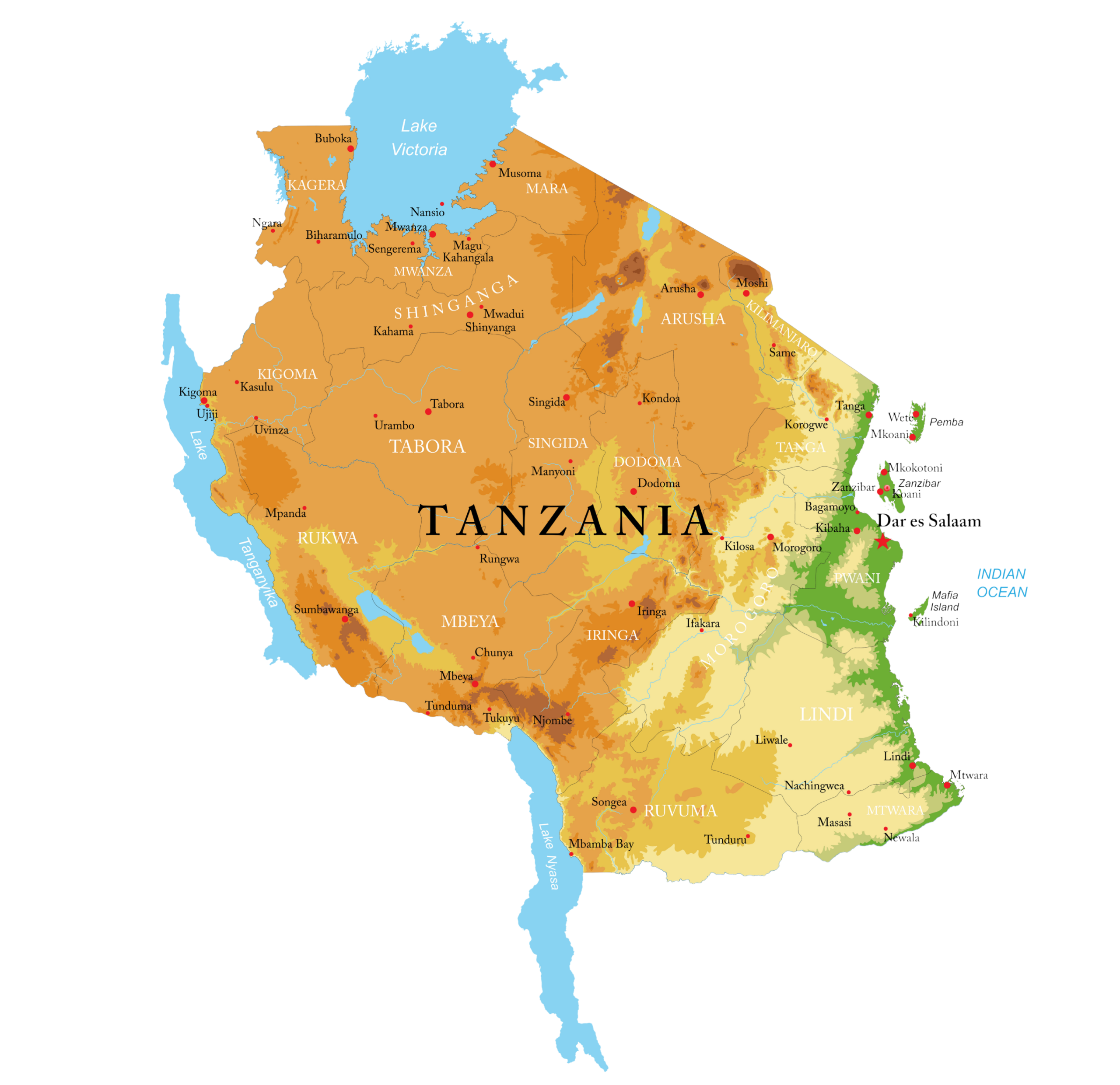
The itinerary below is an example of what we can create and can serve as a base for your own customized journey. Prices vary by season, availability, and group size, with final costs confirmed based on travel dates and itinerary design.
Signature
Classic Itinerary with 3/4-star accommodation- Everything outlined in the boutique package with signature accommodation
Boutique
Classic itinerary with 4-star accommodation.- Itinerary creation
- Airport transfers (arrival and departure)
- Public Charter Flights
- Accommodation as outlined in the itinerary
- Private game drives with professional driver guides
- Meals as indicated in the itinerary
- Scheduled flights and transfers as outlined
- Guided sightseeing and excursions
- National park and conservation fees
- Emergency medical evacuation coverage (AMREF Flying Doctors)
- Dedicated journey support throughout
- Flights and insurance not included
Boutique Plus
Classic Itinerary with 4/5-star accommodation- Everything outlined in the boutique package with boutique plus accommodation
- Private Charter Flights
- VIP arrival and departure lounge
- Driver (optional)
Pricing shown is an estimate. Prices will vary according to season, exchange rate, and other factors. Our tours are all private. Feel free to contact us with any questions you may have.
Check Out the Full Itinerary
The exact location of your stay within the Serengeti may vary depending on the time of year, as the Great Migration moves across the ecosystem — typically in the southern plains from January to March, the western and central regions from April to June, and the northern Serengeti between July and October. Your itinerary is adjusted accordingly to ensure the best possible wildlife experience.
Day 1 – Arrive in Arusha
Dinner
You arrive at Kilimanjaro International Airport, the gateway to northern Tanzania’s safari landscapes. After clearing immigration and customs, you’re met and transferred to your hotel in Arusha, a leafy city set beneath the shadow of Mount Meru.
For most travelers, this first evening is intentionally quiet. Long flights and time zone shifts make it better to ease into the journey rather than rush straight into the bush. Arusha has long served as the starting point for safaris across northern Tanzania, and its pace feels relaxed compared to larger African cities.
After checking in, take time to settle in and decompress. Dinner tonight is simple and restorative — a chance to rest, adjust to the new environment, and begin absorbing the subtle changes in atmosphere that signal you’ve arrived somewhere different.
Tomorrow, the journey into Tanzania’s wildlife landscapes begins.
Day 2 – Tarangire National Park
Transport (2–3 hours), Breakfast, Lunch, Dinner
After breakfast, you meet your safari guide and begin the drive southwest toward Tarangire National Park. The journey gradually leaves the bustle of Arusha behind as the road passes through open countryside, small villages, and the fertile agricultural lands that feed much of northern Tanzania.
Tarangire is often described as one of Tanzania’s quieter parks, yet it offers some of the most memorable landscapes in the country. Ancient baobab trees rise above the savannah like natural monuments, their massive trunks and twisted branches creating an atmosphere that feels almost prehistoric.
Wildlife is abundant here, particularly during the dry months when animals gather around the Tarangire River, the park’s lifeline. Large herds of elephants are a defining feature of the ecosystem, often seen moving slowly across the plains or congregating near the riverbanks.
Your first game drive begins soon after entering the park. The pace of safari travel quickly reveals itself — long stretches scanning the landscape, quiet moments of observation, and the occasional burst of excitement when wildlife appears unexpectedly.
By late afternoon you arrive at your lodge within or near the park. Dinner is served as the light fades over the savannah, and the sounds of the bush — distant bird calls, rustling grasses, and nocturnal wildlife beginning to stir — provide the soundtrack to your first night on safari.
Day 3 – Tarangire National Park
Breakfast, Lunch, Dinner
Today is dedicated to exploring Tarangire in greater depth. Morning often begins early on safari, when temperatures are cooler and wildlife is most active. After a light breakfast, you set out for a morning game drive, following tracks and scanning the landscape as the park slowly wakes.
Tarangire’s terrain is diverse, shifting between open grasslands, wooded areas, and seasonal swamps that attract large concentrations of animals. In addition to elephants, the park supports giraffes, zebras, wildebeest, buffalo, and numerous antelope species, along with predators that move quietly through the ecosystem.
Birdlife here is particularly impressive, with more than 500 recorded species, including colorful bee-eaters, hornbills, and birds of prey circling overhead.
Game drives typically pause midday, either returning to the lodge for lunch or enjoying a picnic in the bush, depending on wildlife activity and location. The afternoon offers another opportunity to explore different parts of the park as the landscape shifts in color and light.
By evening you return to camp for dinner and a relaxed night under the wide Tanzanian sky.
Day 4 – Lake Manyara & Ngorongoro Highlands
Transport (2 hours), Breakfast, Lunch, Dinner
After breakfast, you leave Tarangire and travel toward Lake Manyara National Park, a small but remarkably diverse ecosystem set along the dramatic escarpment of the Great Rift Valley.
Although compact in size, Lake Manyara offers a striking variety of habitats — groundwater forests, open grasslands, and the alkaline lake itself. When conditions are right, large flocks of flamingos gather along the shoreline, adding flashes of pink against the shimmering water.
Wildlife sightings here may include elephants, hippos, giraffes, and tree-climbing lions, one of the park’s more unusual characteristics.
Later in the day, you stop in the lively town of Mto Wa Mbu, where travelers often experience a different side of Tanzania. A local lunch introduces regional flavors, followed by a short visit through nearby villages that offers a glimpse into daily life in this multicultural community.
In the afternoon, the road climbs gradually into the cooler Ngorongoro Highlands, where fertile farmland and forested hills replace the open savannah. You arrive at your lodge in time for dinner and a peaceful evening overlooking one of Tanzania’s most remarkable landscapes.
Day 5 – Ngorongoro Crater
Breakfast, Lunch, Dinner
Today you descend into one of Africa’s most extraordinary natural environments: the Ngorongoro Crater. Formed when a massive volcano collapsed over two million years ago, the crater is now the world’s largest intact volcanic caldera and one of the most remarkable wildlife habitats on the continent.
After breakfast, the road winds down through the forested rim and onto the crater floor nearly 600 meters below. Once inside, the landscape opens into a self-contained ecosystem of grasslands, wetlands, acacia woodlands, and a central soda lake that attracts large numbers of birds.
Because the crater is enclosed by steep walls, wildlife remains here year-round. Herds of zebra, wildebeest, buffalo, and gazelle move across the plains, while predators — including lions, hyenas, and occasionally leopards — patrol the same territory. The crater is also one of the few places in Tanzania where sightings of the endangered black rhino are still possible.
Game viewing here often feels unusually concentrated. Animals appear at close range against a dramatic backdrop of crater walls rising around the entire landscape.
After a full morning exploring the crater floor and a picnic lunch in the bush, you return to the Ngorongoro Highlands in the afternoon for dinner and a relaxed evening at the lodge.
Day 6 – Serengeti National Park
Transport (4–5 hours), Breakfast, Lunch, Dinner
After breakfast, the journey continues west toward the legendary Serengeti National Park. The drive itself is part of the experience, crossing highland landscapes before gradually descending onto the vast plains that define one of Africa’s most iconic ecosystems.
Along the way, many travelers choose to stop at Oldupai Gorge, one of the most important paleoanthropological sites in the world. Discoveries made here helped reshape our understanding of early human evolution, earning the area its reputation as the “Cradle of Humankind.”
As you continue deeper into the Serengeti, the scenery begins to change. The landscape opens into seemingly endless grassland plains, broken only by rocky outcrops known as kopjes and scattered acacia trees.
Wildlife encounters often begin long before reaching the lodge. Herds of gazelle, zebra, and wildebeest may appear across the horizon, while giraffes move slowly between trees and predators follow the movements of grazing animals.
You arrive at your camp or lodge in the afternoon. As the sun begins to lower over the plains, the Serengeti reveals the quiet rhythm that makes this landscape so captivating — vast space, shifting light, and wildlife moving freely across one of the last great ecosystems on Earth.
Day 7 – Serengeti National Park
Breakfast, Lunch, Dinner
Today is devoted entirely to exploring the Serengeti.
Morning game drives often begin early, when the first light spreads across the plains and wildlife activity is at its peak. Your guide will track animals across the savannah, following fresh tracks, listening to distant calls, and scanning the landscape for movement.
The Serengeti is famous not only for its immense herds of grazing animals but also for the predators that follow them. Lions, cheetahs, and leopards are commonly found here, along with spotted hyenas and jackals.
Later in the day, you experience the landscape from a completely different perspective through a guided bush walk near the camp. Accompanied by an experienced guide and an armed ranger, you explore a carefully selected area where wildlife movements are monitored closely. Walking through the bush reveals details often missed from a vehicle — animal tracks in the dust, medicinal plants used by local communities, and the subtle signs wildlife leaves behind as it moves across the plains.
Experiencing the landscape at ground level creates a deeper connection to the environment — the scale of the savannah, the quiet rustle of grass in the wind, and the distant silhouettes of wildlife on the horizon.
After returning to camp, dinner is served as the sun sets across the plains, marking your final evening in the Serengeti.
Day 8 – Return to Arusha
Breakfast, Lunch
Your final morning in the Serengeti begins quietly. Depending on flight schedules and wildlife activity, there may be time for a short morning game drive, when the plains are still cool and animals are most active. It’s often a peaceful way to say goodbye to the landscape — watching the light spread across the grasslands while herds begin to move and predators retreat after the night’s hunt.
Later, you transfer to a nearby Serengeti airstrip for the scheduled bush flight back to Arusha. The flight itself offers one last perspective of the ecosystem you’ve spent the past days exploring, as the vast plains of the Serengeti stretch beneath the aircraft.
Upon landing in Arusha, you connect onward to Kilimanjaro International Airport for your international departure. Depending on your flight time, there may be an opportunity for lunch or a short rest before continuing to the airport.
As the journey concludes, the memories remain vivid — Tarangire’s ancient baobab trees, the remarkable wildlife of the Ngorongoro Crater, and the sweeping horizons of the Serengeti.

Proud Members of ATTA

Eco-Tourism Provider