
In ancient Rome, legend held that the rose first sprung from the blood of Adonis. Crowns of roses were used in weddings, garlands were hung at banquets and petals were strewn beneath the feet of victors. And while we may not be in ancient times, there is still a place that revels in the luxurious beauty of this flower: the Moroccan Festival of Roses.
The 2026 edition wrapped up on May 10th, four days of folklore, parades, and rose-scented everything in the Dadès Valley. If you missed it this year, this is what it looked like, and why it’s already worth planning around for 2027.
A Valley That Earns Its Name
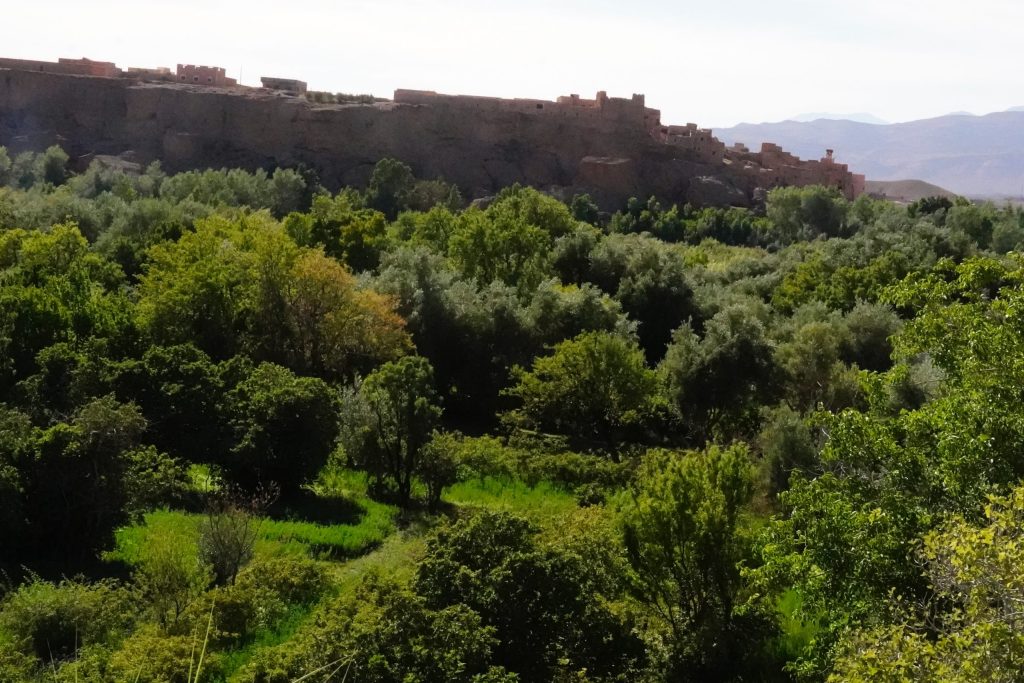
Held annually in Kalaat M’Gouna, approximately 50 miles northeast of Ouarzazate in the Dadès Valley, Morocco’s Festival of Roses celebrates the season’s rose harvest. In this area known as the Valley of Roses, the air is scented with the fragrant Centifolia rose, also called Rosa Damascena, or the Persian rose, and the streets are lined in flowering hedgerows. The Moroccan rose industry is centered here, processing the lush pink blooms into rose oils for perfumes, beauty products, and cooking ingredients.
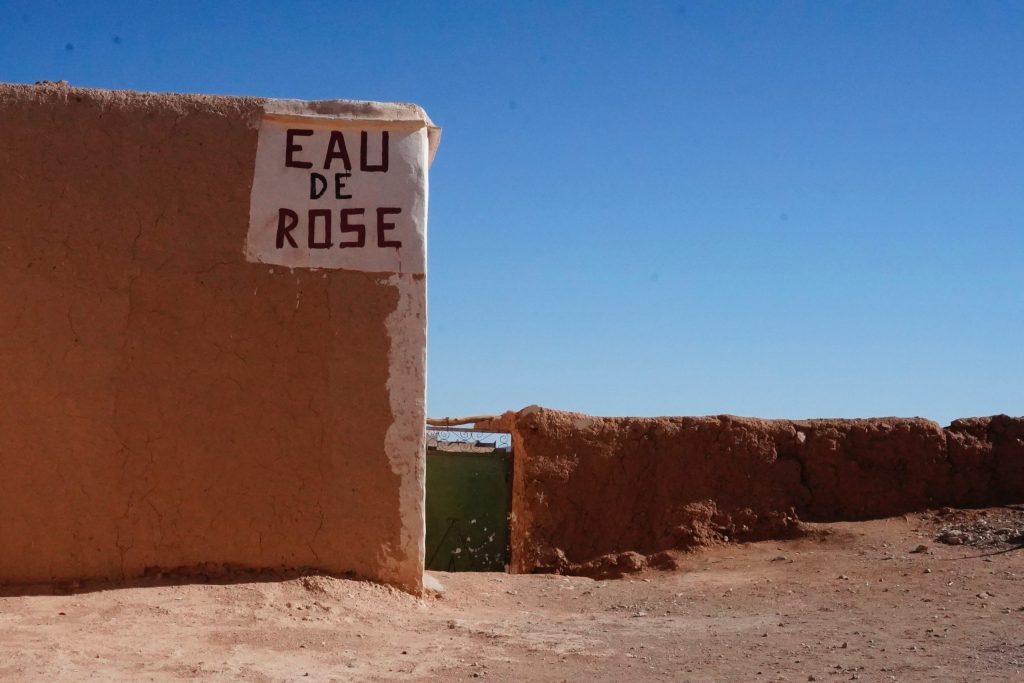
What makes this place extraordinary isn’t just the flowers themselves but the sheer scale of what it takes to extract their essence. It takes nearly 7,000 pounds of petals to produce just 35 ounces of oil. Every liter of rose attar (perfume) represents tons of hand-picked flowers, harvested in the early morning before the heat sets in, processed within hours so nothing is lost. You can tour the country’s largest rose distillery to see how rosewater and rose attar are made, and smelling that first run of condensed steam is something that stays with you.
Since the harvest culminates with the festival, arriving a few days earlier rewards you with something genuinely unusual: literally tons of rose petals being trucked into the factories, their scent wafting behind them down the N10 highway. The surrounding countryside of almond groves and rose hedgerows makes those pre-festival days ideal for long, fragrant walks.
What Happened at the 2026 Festival
The 2026 Salon International de la Rose à Parfum ran from May 7 to 10, officially under the patronage of King Mohammed VI. Four days, several venues, and the kind of layered program that rewards visitors who stay for more than just the Saturday parade.
Thursday, May 7 : The Opening
The festival opened with the formal ceremony, speeches, a signing of conventions, prize-giving , before the Salon exhibition opened to the public. By afternoon, the Place des festivités was alive with the first folklore performances of the year: Amazigh music, group ahwach singing, the particular energy of a community settling into celebration mode.
The first day tends to be the most local, the least crowded, and in some ways the most honest version of what the festival actually is. A town honoring its harvest.
Friday, May 8 : Roses as Serious Business
Friday morning was given over to scientific conferences at the Salle des conférences: researchers, producers, and agricultural officials discussing the rose industry’s future, cultivation, distillation yields, economic sustainability. It’s a side of the festival that rarely makes the travel write-ups, but it matters. After all, the Moroccan rose sector is a living industry that people in this valley depend on.
The afternoon opened back up into music and stand visits, the Salon buzzing with producers, cooperatives, and craft vendors from across the Drâa-Tafilalet region.
Saturday, May 9 : The Day the Valley Turns Pink
“It is the time you have lost for your rose that makes your rose so important,” Antoine de Saint-Exupéry wrote in The Little Prince, and the Saturday celebrations reflect exactly this dedication and exuberance.
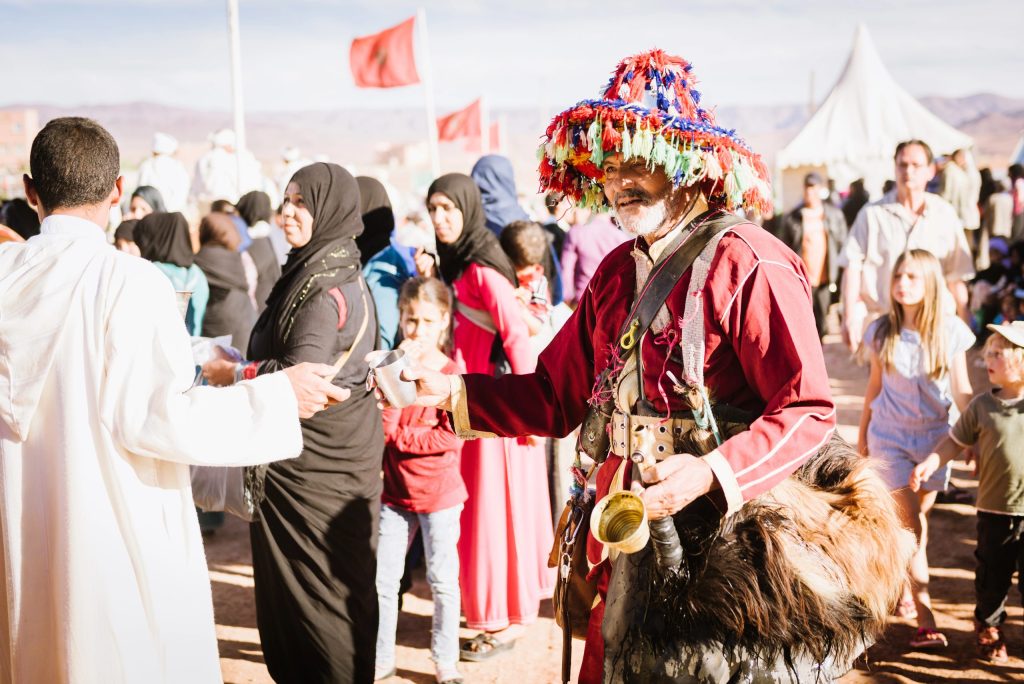
This is the day worth building your whole itinerary around. The carnival parade moves down Boulevard Mohammed VI in the afternoon, a Rose Queen presiding over petal-strewn floats, children handing out garlands in the streets, Amazigh musicians walking the route alongside dancers. The souk transforms into a bonanza of rose-scented gifts: soaps, lotions, oil, perfumes, dried flowers. There is traditional Amazigh food, music, and dancing, and an exhibition of local crafts that draws artisans from across the region.
The Miss Rose election and the agricultural prize-giving ceremony run alongside the afternoon festivities, giving Saturday its particular quality of celebration layered over celebration, personal, communal, and genuinely joyful in a way that doesn’t feel performed.
Local lore has it that the rose has been celebrated in Morocco ever since its arrival in the 10th century, carried here by pilgrims from Saudi Arabia. And it is still primarily a festival for local villagers and farmers. The visitors are welcome, but they’re guests at someone else’s party, which is exactly what makes it worth attending.
Sunday, May 10 : The Long Goodbye
Sunday wound down slowly. The Salon stayed open through the morning, a final folklore session ran into the evening, and by nightfall the hedgerows were quiet again. The roses that hadn’t been harvested yet would be picked in the days following, processed into the last batches of the season, and the valley would return to its ordinary flow until next spring.
What to Buy (and How Not to Get It Wrong)
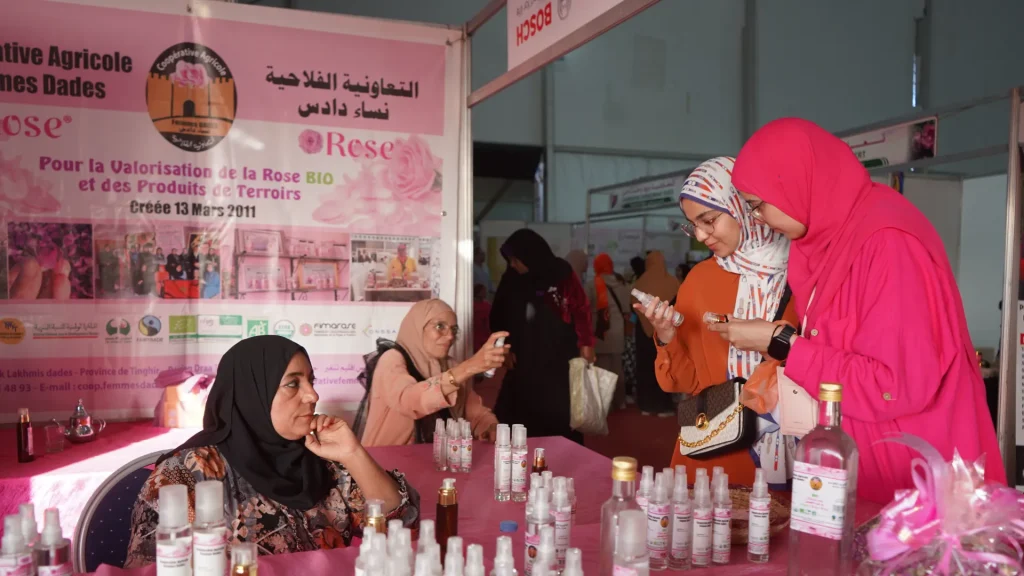
The Salon stands are the best place to buy rose products, better selection, more reliable provenance, and generally better prices than what you’ll find in Marrakesh or Fès. Producers sell directly, which means you can ask questions and get real answers.
The single most important thing to know: authentic rosewater is clear. The pink-colored versions sold widely across Morocco are synthetic. If it’s pink, it’s not real. Rose oil is expensive for good reason, the yield per kilogram of petals is genuinely tiny, and anyone selling it cheaply is selling you something else.
Beyond rose products, the festival souk carries locally made Berber jewelry, leather goods, and silver work from artisans who don’t otherwise have easy access to international visitors.
Planning for 2027
Because the festival is tied to the harvest rather than a fixed calendar date, the exact dates shift slightly each year, but the window is reliably within the first two weeks of May. The 2026 edition ran May 7–10; 2027 will be in the same general range.
A few things worth knowing before you go:
Come earlier than Saturday. The crowds peak on parade day, and the pre-festival days, when the fields are full and the distilleries are running, are often more atmospheric for anyone genuinely interested in the rose beyond the pageantry.
Book accommodation early. Guesthouses in and around Kalaat M’gouna fill quickly for festival weekend. Ouarzazate is a workable base 85 km away, but an overnight in the valley itself is worth the extra planning.
The festival is family-friendly in the most straightforward sense, children are central to it. Garland-selling kids, parade participation, the communal meals on the square. It works for all ages.
Bring cash. Most vendors at the festival don’t take cards.
Getting There
Kalaat M’gouna sits on the N10 highway in the Dadès Valley, 85 km east of Ouarzazate. Most visitors arrive as part of a southern Morocco circuit, Ouarzazate, the Dadès Gorges, Kalaat M’gouna, then east to Tinerhir and the Todra Gorge or south toward the Sahara.
CTM buses connect the town to Ouarzazate and Marrakesh, but a private driver or rental car gives you the flexibility to stop at distilleries and villages along the way. The drive itself, through the valley with the Atlas rising on either side, is part of the experience.
Frequently Asked Questions
Is the Festival of Roses only for tourists? No, and this is part of what makes it worth attending. It is primarily a local celebration: farmers, producers, and Amazigh communities from across the valley. Visitors are welcome, but they’re attending something real rather than something staged for them.
Can I visit a rose distillery during the festival? Yes, and it’s one of the best things to add to your visit. The processing season coincides exactly with the festival, so the distilleries are operating at full capacity. Ask your accommodation or a local guide to arrange a visit, some distilleries welcome walk-ins, others prefer advance notice.
What’s the difference between rosewater and rose attar? Rosewater is the hydrosol, the water that comes off during steam distillation, lightly scented and used in cooking, skincare, and as a general aromatic. Rose attar (essential oil) is the concentrated oil extracted from the same process, far more potent and far more expensive. Both are worth buying here; both are significantly cheaper than what you’d pay elsewhere.
How long should I stay? Two nights minimum if you want to see both the pre-festival fields and the Saturday parade. Three nights gives you time to hike, visit a distillery, and explore Bou Tahrar or the Dadès Gorges without feeling rushed.
Combining the Festival With a Broader Morocco Itinerary
The Festival of Roses pairs naturally with the rest of the southern circuit:
- Boumalne Dadès and the Dadès Gorges — 40 km west, dramatic canyon scenery
- Todra Gorge near Tinerhir — 60 km east, a canyon carved by the Todgha River, popular with climbers and hikers
- Ouarzazate — the southern gateway, with Aït Benhaddou 30 km outside town
- The Drâa Valley — south toward Zagora through date palm oases and fortified villages
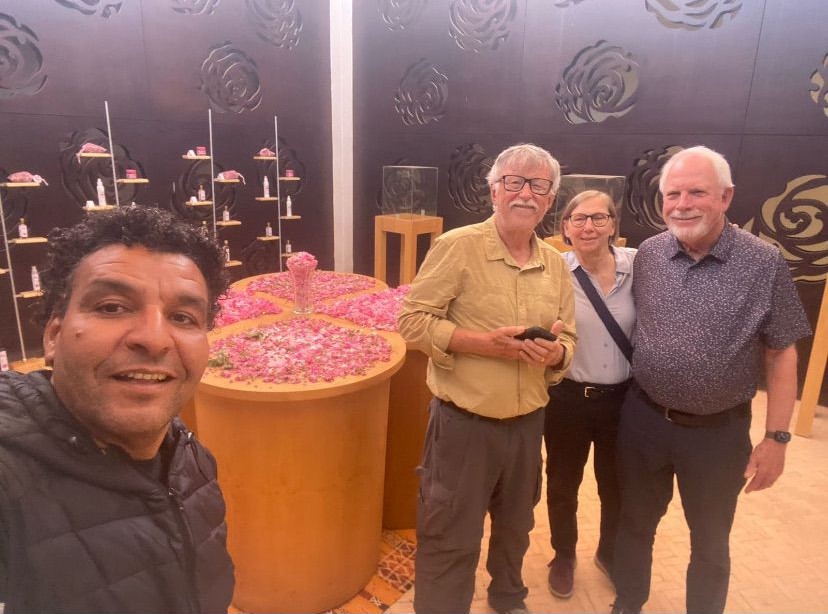
If you’re building a Morocco itinerary around the May festival window and want help getting the timing right, Journey Beyond Travel has been running southern Morocco trips since 2007. We know this valley, this festival, and exactly how to structure a week around it so the rose harvest doesn’t feel like a checkbox.
About the Author

Ahlam Morjani is a Tangier-based writer, aspiring psychologist, and devoted animal lover. When she’s not immersed in her work or studies, she’s exploring the intersections of cinema, philosophy, and self-development through her articles.
She loves to spend her quiet days feeding the city’s strays that roam the medina’s narrow streets or settling into the worn velvet seats of Tangier’s old cinemas, finding profound inspiration within these spaces that resonate with her explorations into film and art, societal nuances, and the very joie de vivre of life itself.



thinks very much
more info