
Essential Jordan
Highlights & Hidden Delights
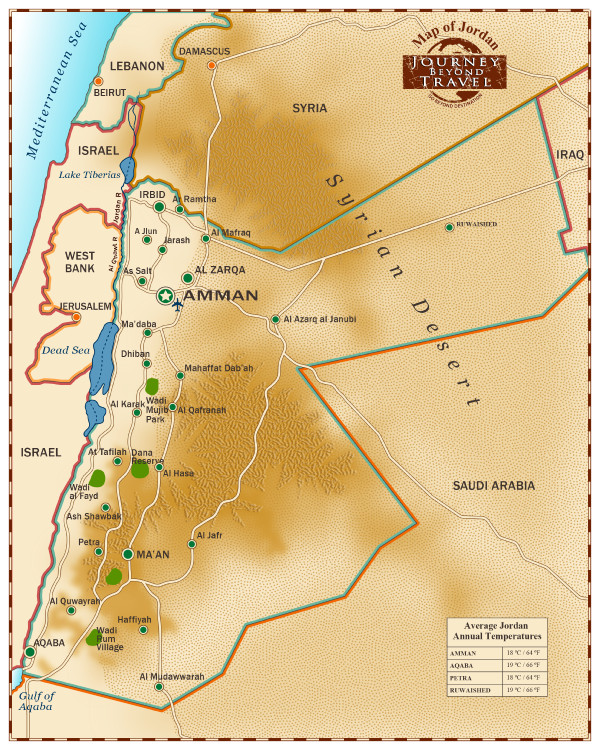
The itinerary below is an example of what we can and have put together. We can use this as a base for your own customized journey.
Signature
Classic Itinerary with 3/4-star accommodation- Everything outlined in the boutique package with signature accommodation
Boutique
Classic Itinerary with 4-star accommodation- Expert custom itinerary creation
- Airport transfer (arrival & departure)
- Handpicked 4-star hotels and unique desert camps
- All breakfasts
- Lunches, dinners, and other meals as indicated
- Personalized, private guided tours of Amman, Petra, Wadi Rum, Jerash, Madaba, Mount Nebo, and the Dead Sea
- Entry to select archaeological sites and museums (including Petra by Night, Jerash ruins, Wadi Rum desert safari, and Dead Sea resorts)
- City-to-city transfers by private vehicle
- In-city transfers by private car or appropriate transport
- Authentic experiences like sunset camel rides, Bedouin dinners, stargazing in Wadi Rum, cooking classes, and floating in the Dead Sea
- Dedicated journey support
- Flights and insurance not included
Boutique Plus
Classic Itinerary with 4/5-star accommodation- Everything outlined in the boutique package with boutique plus accommodation, desert lodges, or Dead Sea spa resorts
- Private driver throughout your entire journey
Pricing shown is an estimate. Prices will vary according to season, exchange rate, and other factors. Our tours are all private. Feel free to contact us with any questions you may have.
Check Out the Full Itinerary
Day 1: Arrival in Amman
Upon arrival at Queen Alia International Airport in Amman, you’ll be greeted by your guide and transferred to your hotel. Take some time to rest and adjust to the local time zone. Your first stop is the King Abdullah I Mosque, a stunning modern Islamic structure built in the 1980s and instantly recognizable for its sky-blue dome and elegant minarets. Step inside the spacious prayer hall – open to visitors of all faiths – and admire the stained glass, mosaics, and tranquil ambiance. Head to the Amman Citadel (Jabal al-Qal’a), a significant site of historical significance, where you’ll marvel at the remnants from the Roman, Byzantine, and Umayyad periods. You will explore the Temple of Hercules, its massive hand-shaped relic among the fallen columns, and the Umayyad Palace, with its grand ceremonial hall and Islamic artistry. You’ll then descend to the Roman Theater, an impressive 6,000-seat amphitheater carved into the hillside. Finish off your day with a visit to Rainbow Street in the Jabal Amman district. This vibrant and bustling street is lined with charming cafes, eclectic boutiques, and art galleries. Here, you can sip traditional cardamom coffee while enjoying the views of the golden-hued city. The lively atmosphere offers a glimpse into the fusion of modern culture with Jordan’s deep-rooted history.
Day 2: Jerash and Ajloun with Orjan Village Homestay
After breakfast, you will depart Amman and journey north through the fertile hills of Gilead toward Jerash, one of the most spectacular and best-preserved Greco-Roman cities outside Italy. Often referred to as the “Pompeii of the East,” Jerash unfolds like an open-air museum, revealing layer upon layer of ancient civilization. Upon arrival, you will walk through Hadrian’s Arch, an imposing triple-arched gateway built to honor Emperor Hadrian’s visit in 129 CE. From there, enter the city proper and begin your exploration along the colonnaded Cardo Maximus, the main street that once bustled with merchants, chariots, and citizens in togas. Admire the ruts carved into the stone by ancient wheels and notice the underground drainage system – a marvel of Roman engineering. You will then make your way to the Oval Plaza, an elegant forum encircled by 56 Ionic columns, where religious, political, and social life once converged. Visit the Temple of Zeus, perched on a hill with sweeping views over the ruins, and descend to the South Theater, which once seated up to 3,000 spectators. If you’re lucky, you might even hear the traditional Jordanian bagpipe performers who still demonstrate the acoustics today. Continue on to the North Theater, the Nymphaeum (a grand public fountain), and several Byzantine churches adorned with ancient mosaics.
Enjoy a home-cooked farm-to-table lunch, where each dish is a celebration of Jordan’s northern culinary heritage – everything from freshly baked bread and aromatic stews to rich dips made from seasonal, locally sourced produce. This is more than just a meal; it’s a heartfelt exchange and a chance to experience daily village life!
Continue your journey through olive groves and pine-covered hills to reach Ajloun, a region known for its cooler climate and green landscapes. Here, you’ll visit the Ajloun Castle (Qal’at Ar-Rabad), a formidable 12th-century fortress commissioned by one of Saladin’s generals during the Crusader period. The castle was strategically placed to control the route between Damascus and the Jordan Valley, and to protect local iron mines. Climb to the top for breathtaking panoramic views stretching across the surrounding valleys and over to the West Bank on clear days. Inside, you’ll find exhibits of medieval weaponry and interactive displays that paint a picture of life during the Crusades. Return to Amman in the late afternoon.
Day 3: Madaba, Mount Nebo, and Petra
After breakfast, you will depart Amman and begin your journey south along the historic King’s Highway, one of the oldest continuously used trade routes in the world. Your first stop is the town of Madaba, often called the “City of Mosaics.” This unassuming town holds some of the most important examples of Byzantine-era art in the region. Wander through its quiet streets to reach the Greek Orthodox Church of St. George, where you’ll discover the town’s most treasured artifact: the 6th-century mosaic map of the Holy Land, composed of over two million colored tiles. This remarkable floor mosaic once served as a geographic guide for Christian pilgrims and depicts Jerusalem, Bethlehem, the Dead Sea, the Nile River, and other significant biblical sites. Your guide will help decode its intricate symbols and explain its historical importance in early Christian cartography. If time allows, stop by the Madaba Archaeological Park, where more mosaics, ancient churches, and a Roman road await, offering deeper insight into the town’s multi-layered past.
In the afternoon you will continue to nearby Mount Nebo, a site steeped in spiritual and historical significance. According to tradition, this is the mountain from which Moses looked out over the Promised Land before his death. Standing at the summit, absorb the breathtaking panoramic views that stretch across the Jordan Valley, the Dead Sea, and on a clear day the distant silhouettes of Jerusalem and Bethlehem shimmering on the horizon. Visit the modern memorial church that shelters the remnants of a 4th-century Byzantine monastery. Inside, admire its beautifully preserved mosaic floors, which feature hunting scenes, animals, and pastoral life. Outside, take in the symbolic bronze serpent sculpture, which references the biblical tale of Moses and the bronze serpent. Your journey will continue south through the rugged highlands and ochre valleys of central Jordan, taking you to in Petra, the legendary Rose-Red City carved into the sandstone cliffs of southern Jordan! After check-in at your hotel, enjoy a traditional Jordanian dinner at a local restaurant, where you’ll savor dishes like mansaf (lamb with rice and yogurt), magloubeh (a spiced rice and vegetable casserole), and freshly baked shrak bread. Let the aromas of cumin, coriander, and lemony sumac set the tone for the wonders awaiting you tomorrow in Petra.
Day 4: Petra
Begin your full-day immersion into the awe-inspiring ancient city of Petra, a UNESCO World Heritage Site and one of the New Seven Wonders of the World. Accompanied by your guide, you will enter through the Siq, a dramatic and narrow gorge flanked by towering sandstone walls that rise up to 80 meters. As you walk along this winding path, keep an eye out for ancient Nabatean water channels, faint carvings in the rock, and weathered niches that whisper stories from two millennia ago. As the canyon opens up, you’ll be met with your first glimpse of Al-Khazneh – the Treasury, one of the most iconic monuments in the world. Carved directly into the rose-red rock face, its intricate Hellenistic façade with Corinthian columns, statues, and a mysterious urn is a jaw-dropping sight that leaves many speechless. After lunch you will continue deeper into the archaeological park to explore the Street of Facades, lined with dozens of tombs and monumental dwellings carved into the cliff. These structures served as burial sites and ceremonial places for the Nabatean elite. Make your way to the Royal Tombs, perched on the eastern cliffs and including the Urn Tomb, the Silk Tomb, and the Palace Tomb – each with its own unique architecture and color striations in the stone. From here, you’ll enjoy sweeping views of the Petra valley below.
A short walk away is the Roman Theater, capable of seating 6,000 spectators. Unlike typical Roman amphitheaters, this one was carved entirely from rock, later expanded by the Romans when they took control of Petra. For those seeking a challenge and breathtaking views, take on the hike up to the Monastery (Ad Deir) one of Petra’s largest and most awe-inspiring monuments. The trail includes about 800 rock-cut steps that wind through dramatic ravines and stone staircases, but the reward is immense: a massive façade similar to the Treasury, but even grander in scale and standing in solitary majesty. From the viewpoint above, you can gaze over vast stretches of the Wadi Araba desert and surrounding mountains. After resting and freshening up, return for an unforgettable sensory experience: Petra by Night. Walk once again through the silent Siq, now lit by the soft glow of over 1,500 candles, guiding you toward the Enjoy traditional Bedouin music played on the rababa or ney flute as you sip on warm tea and absorb the magical stillness of the site. This ethereal moment, surrounded by candlelight and silence, will be one of the most moving highlights of your Jordanian journey!
Day 5: Wadi Rum Jeep Tour and Dead Sea
After breakfast in Petra, set off for the journey south to Wadi Rum, often referred to as the Valley of the Moon for its otherworldly, dreamlike beauty. As you leave the rose-red city behind, the landscape gradually shifts from rugged mountains to vast stretches of golden desert, punctuated by massive sandstone and granite formations that rise dramatically from the desert floor. Upon arrival at the protected area of Wadi Rum – designated a UNESCO World Heritage Site – you’ll be greeted by your Bedouin hosts, whose families have lived in this region for generations. Climb aboard a 4×4 jeep and embark on a thrilling off-road adventure through the desert’s most iconic landmarks. Your Bedouin guide, skilled in reading the landscape like a map, will take you through narrow canyons, over red and white dunes, and to majestic rock arches like Um Fruth and Burdah Bridge. Stop to examine ancient petroglyphs etched into the rocks – messages left by the Thamudic and Nabatean peoples thousands of years ago. You’ll visit Lawrence’s Spring, named after T.E. Lawrence (Lawrence of Arabia), who passed through Wadi Rum during the Arab Revolt.
Travel north to the Dead Sea, the lowest point on Earth, where the landscape transitions into a surreal vista of salt-encrusted shores and shimmering waters. Once there, experience the unique sensation of floating effortlessly in the hypersaline waters, which support you like a cushion, allowing you to relax without any effort. The mineral-rich water has therapeutic qualities that soothe both body and mind. Indulge in a mineral mud bath, known for its rejuvenating properties. The black mud is rich in salts and minerals, leaving your skin silky smooth and revitalized after you rinse it off.
Day 6: Dead Sea
After a relaxing morning at the Dead Sea, you will head back to Amman where we’d like to offer our travelers two enriching options depending on their interest:
- Jordanian Cooking Class & Wine Tasting
Join a local chef in a hands-on cooking session where you’ll prepare and taste beloved Jordanian dishes such as maqluba, tabbouleh, and knafeh. Afterward, enjoy a tasting of Jordan’s boutique wines, learning about the country’s emerging wine culture in a relaxed, convivial setting. - Desert Castles Tour
Journey east of Amman to explore the enigmatic Umayyad Desert Castles, including Qasr Al-Kharanah, a perfectly symmetrical fortress; Qasr Amra, a UNESCO site famous for its well-preserved frescoes; and Qasr Al-Azraq, where T.E. Lawrence based his operations during the Arab Revolt.
Day 7: Amman
Today you will leave Jordan, but before you depart – if time allows – opt for a visit to the Jordan Museum, home to a wealth of archaeological and cultural treasures. Highlights include the Ain Ghazal statues – some of the oldest known human figures ever made – and portions of the Dead Sea Scrolls, as well as exhibits that trace Jordan’s history from prehistoric times to the modern era.

Proud Members of ATTA

Eco-Tourism Provider